If you’ve ever stood beside a manual surface grinder, watching an operator squint at the workpiece, adjust the feed handle one too many times, or stop mid-pass to wipe away a pile of swarf, you know the tool is equal parts precision and patience. As a manual surface grinder supplier, I’ve spent 12 years walking operators through setup, troubleshooting, and the small missteps that turn a perfect grind into a scrap part. Most of these mistakes aren’t from carelessness—they’re from habits picked up on the shop floor, passed down from one worker to the next without formal training. Below, I’ve rounded up the most common errors I see every week, how they hurt your parts, and what you can do to fix them. Manual Surface Grinder

First up, skip-truing the grinding wheel. This is the mistake I see more than any other, and it’s the one that causes the most obvious (and avoidable) defects. When a new or dressed grinding wheel first goes onto the grinder’s spindle, it’s rarely perfectly concentric. If you don’t true it—meaning you grind a tiny amount off the wheel’s face to make it spin true—you’ll get wavy, inconsistent surface finishes, or even chatter marks that turn a $100 steel block into a $500 scrap. I’ve had a customer come to me last month because their lathe parts were coming out with uneven dimensions; after checking their grinder, I found their wheel was 0.002 inches off center, enough to add 0.001 inches to one side of the workpiece on every pass. Even a lightly used wheel can lose its concentricity if it’s bumped, so truing should be a non-negotiable step before every production run. And don’t skimp on the truing process: use a diamond dresser, apply consistent pressure, and take light passes, not one big grind that can overheat the wheel and ruin its bond.
Next, under-feeding (or over-feeding) the cross and vertical feeds. Manual surface grinders rely on hand cranks for feed, and it’s easy to get into a rhythm where you crank too fast or too slow, especially when you’re focused on holding the part steady. Too fast a feed on the vertical axis means you’re removing too much material in one pass, which can cause the wheel to burn the workpiece, pull grains out of the wheel prematurely, or even bounce off the surface and gouge the part. Too slow a feed, though, is equally bad—you’ll spend hours on a simple grind, and the constant contact between the wheel and workpiece can create heat buildup that warps thin workpieces, like 0.125-inch aluminum plates used in aerospace brackets. The sweet spot? For most steel parts, a vertical feed of 0.0005 to 0.001 inches per pass is standard, but you should adjust based on the workpiece material and wheel grit. For softer materials like brass, go a bit deeper; for hardened steel, stick to smaller increments. The cross feed, which moves the table left and right, also has a common mistake: never let the cross feed crank reach its end stop mid-pass. That can strip the gear teeth on the grinder’s table, a repair that costs twice as much as the small part you’re trying to grind. I’ve seen operators push the cross feed too far, snap a gear, and shut down production for three days waiting on a replacement part—all because they didn’t check the feed’s limit before starting.
Third, poor part fixturing and alignment. Manual surface grinders only work if the workpiece is held perfectly flat and square to the wheel. The biggest mistake here is using a worn magnetic chuck or not cleaning the chuck before mounting a part. Even a tiny chip of swarf or a speck of coolant between the chuck and the workpiece can lift the part just enough to create a sloped surface, leading to uneven thickness across the part. I had a job shop client last year that was scrapping 20% of their die molds because of this—they’d run a part, leave swarf on the chuck, and mount the next part without cleaning it. Simple fix: a quick wipe with a lint-free cloth and a scrape with a wooden tool to remove debris before every mount. Another fixturing mistake is not truing the chuck itself. Magnetic chucks can develop a slight curve over time, especially if they’re dropped or overloaded with heavy workpieces. If you don’t true the chuck every few months, your parts will never come out perfectly flat, no matter how careful your grind is. For manual grinders, truing the chuck is as easy as taking a light pass over the empty chuck surface with a grinding wheel, then checking the flatness with a height gauge. Also, never clamp a part directly to the chuck for thin workpieces—use parallels to support the part, so it doesn’t flex when you apply the magnetic force. Flexing thin aluminum or steel will leave a curved surface that’s impossible to correct with grinding.
Fourth, ignoring swarf management and wheel dressing frequency. Swarf—those tiny metal shavings that come off the workpiece during grinding—might seem like a minor nuisance, but it’s one of the biggest causes of surface defects. If swarf builds up between the grinding wheel’s grains, it can clog the wheel, making it act like a dull tool instead of a sharp one. A clogged wheel will burn the workpiece, leave a rough finish, and even cause the wheel to crack under pressure. The fix here is twofold: keep the work area clear of swarf with a brush or vacuum, and dress the wheel regularly to clear out clogged grains. How often should you dress? For heavy production runs, dress the wheel after every 10 to 15 workpieces; for smaller jobs, dress it at the start of each shift. Another mistake related to swarf: using too little coolant. Coolant does more than just keep the workpiece cool—it flushes swarf away from the wheel and reduces friction between the wheel and the part. If you’re only using a trickle of coolant, swarf will stay in the wheel’s pores, leading to the clogging I mentioned. I’ve seen operators turn the coolant off to get a “better view” of the grind, but that’s a quick way to ruin a $50 grinding wheel and a $200 workpiece. Modern manual surface grinders come with adjustable coolant nozzles, so position the nozzle to hit the point where the wheel touches the part—you’ll get a cleaner finish and extend your wheel life by 30%.
Fifth, rushing the final passes. The last few passes of a surface grind are where you get the tight tolerances you need, whether that’s 0.0001 inches of flatness or a mirror-like finish. Rushing these passes is a common mistake, and it’s easy to do when you’re wrapping up a job. Operators will crank the vertical feed a little too much, take a quick pass, and end up with a part that’s either oversize or has a scratch from a dull wheel. For the final finishing passes, you should take only 0.0001 to 0.0005 inches of material off per pass, and run the cross feed at a slower rate, so the wheel has enough time to remove material evenly. Another rush-related mistake: not letting the table come to a full stop before reversing direction. If you reverse the cross feed while the table is still moving, you’ll get a sudden jerk that can leave a deep scratch on the workpiece. I always tell operators to watch the table and wait until it’s completely still before cranking the cross feed back the other way—It takes an extra two seconds, but it saves you from scrapping a perfectly good part.
Now, let’s talk about how these mistakes add up to real costs for shops. A small job shop might see 15% scrap rate from avoidable grinding errors, which can eat into profit margins quickly. For a production shop, those errors can delay orders, upset customers, and even lead to lost contracts. As a manual surface grinder supplier, I design our machines with these mistakes in mind: our feed cranks have built-in stop blocks to prevent over-feeding, our magnetic chucks have a hardened flat surface that lasts twice as long as standard chucks, and our wheel spindle has precision bearings that make truing easier and more accurate. But even the best machine can’t fix bad habits—training is just as important as the tool itself. If you’re new to manual surface grinding, don’t rely on on-the-job training alone; take a course from a grinding equipment manufacturer, or work with an experienced operator to walk through the basics.
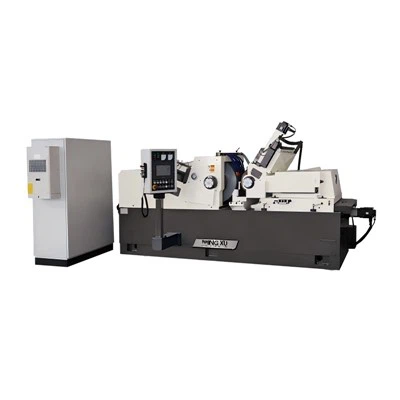
If you’re tired of scrap parts, machine downtime from avoidable repairs, or inconsistent finishes on your workpieces, let’s talk about how to adjust your process. We can help you go over your current setup, identify where your mistakes are happening, and recommend adjustments to your manual surface grinder and workflow to get better results. Whether you’re a small job shop or a large production facility, we’re here to make sure you get the most out of your manual surface grinding equipment.
Precision Centerless Grinder References
- Machining Fundamentals: A Practical Guide for Manual and CNC Operations, Industrial Press, 2019.
- Surface Grinding: Best Practices for Precision Manufacturing, Society of Manufacturing Engineers, 2021.
- Maintenance and Troubleshooting Manual for Manual Surface Grinders, United Grinding Technologies, 2022.
- Metallurgy for the Non-Metallurgist, ASM International, 2020.
Wuxi Mingxu Machinery Equipment Co., Ltd.
As one of the most professional manual surface grinder manufacturers and suppliers in China, we’re featured by quality products and good price. Please rest assured to buy the best manual surface grinder for sale here from our factory. Also, custom service is available.
Address: No. 5-5 Jinke Wealth Plaza, Changjiang North Road, Xinwu District, Wuxi City, Jiangsu Province
E-mail: yingyingmxjd@163.com
WebSite: https://www.mingxu-china.com/
