If you’ve ever held a sterile surgical drape, an implantable device seal, or a single-use medication vial component, you might assume that manufacturing parts for medical settings requires complex, specialized processes that only a handful of facilities can pull off. As a medical die cutting supplier with 12 years of hands-on experience supporting hospitals, device makers, and biotech startups, I get this question at least a dozen times a week: Can die cutting actually produce sterile medical components? The short answer is yes—but only when you pair die cutting’s precision with strict, science-backed protocols tailored to medical-grade parts. Let’s break this down the way I do with every new client, no fluff, just real-world results and the hard rules that make this work. Medical Die Cutting
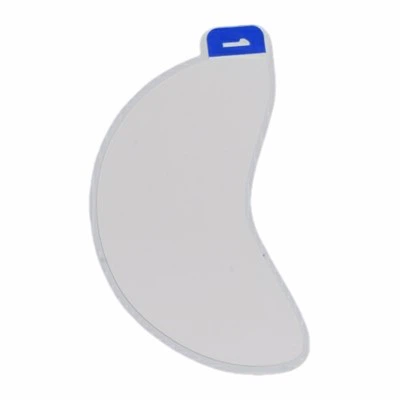
First, let’s demystify what die cutting actually is for medical use, because it’s not the same as cutting out custom stickers or craft materials. For non-medical applications, die cutting uses a shaped steel rule or rotary die to stamp out parts from sheet stock, often with room for tiny errors. Medical die cutting? We’re working with tolerances measured in thousandths of an inch—for example, a seal for an insulin pen might need to line up within 0.005 inches to ensure it doesn’t leak, and a surgical drape’s adhesive border can’t extend beyond its edge to avoid sticking to gloves or tissue. On top of that, every material we source is classified to meet FDA, ISO, or USP Class VI standards, because even a tiny speck of non-compliant adhesive or a micro-scratch in a plastic film can make a component unfit for sterile use.
A common misconception I hear from new clients is that die cutting introduces contaminants that break sterility. It’s true that unregulated die cutting lines can have dust, adhesive residue, or metal shavings from worn dies, but that’s where our process changes entirely. We don’t run our medical production lines in a regular warehouse space—we operate in class 100,000 cleanrooms, and for higher-risk parts like implantable device gaskets, we use class 10,000 and class 100 (ISO 5) cleanrooms, the same standard used for manufacturing pacemakers and IV components. A class 100 cleanroom means there are no more than 100 particles (0.5 microns or larger) per cubic foot of air—think of it as a hospital operating room, scaled for manufacturing. Every employee on the line wears full bunny suits, hairnets, face masks, and shoe covers, and we follow daily air quality tests and surface swabs to confirm contamination levels stay within limits. That’s non-negotiable. You can’t make sterile parts in a dirty space, and die cutting’s precision makes it easier to maintain that cleanliness than many other manufacturing methods.
Wait, but how do we ensure the die cutting process itself doesn’t introduce contamination? Let’s take an example I use with clients: a custom adhesive patch for a post-surgical wound care system. This part needs to cut to an exact oval shape, have a layer of medical-grade acrylic adhesive, and leave a small, defined cutout for the drainage port. First, we source the raw material from FDA-registered suppliers, so we start with a sterile or pre-validated non-contaminated stock. Then, we use rotary dies (better for cleanroom use than flat steel rules, because they operate with less friction and generate fewer loose particles) that are polished to a mirror finish and sanitized with medical-grade ethylene oxide (EtO) or autoclaved before each production run. We also include inline cleaning steps between die cuts—tiny, non-abrasive air jets blow away any loose adhesive or metal particles, and we do real-time laser scanning to check for defects in every part. I’ve had clients come to visit our facility and watch this process, and the first thing they comment on is how little mess there is. No flying debris, no sticky residue all over the line, just controlled, precise cuts. That’s how we avoid adding contaminants during production.
Next, sterility validation is the make-or-break step that separates hobbyist die cutting from medical die cutting. Sterile medical components aren’t just “clean”—they’re validated to be free of viable microorganisms (like bacteria, fungi, or viruses) and non-pyrogenic (meaning they won’t cause a fever or immune reaction if they enter the body). Die cutting is often part of a larger sterilization workflow, and we work closely with our clients to make sure our parts play nice with whatever sterilization method they use: gamma irradiation, EtO, or autoclaving. For example, we recently developed a series of thin, flexible plastic cutouts for pharmaceutical vial stoppers. These parts are die cut from a food-grade, silicone-based film that resists breaking down when exposed to EtO gas, which is the most common method for sterilizing single-use medical devices. We worked with a third-party sterilization lab to test the parts before and after EtO exposure: no change in cut tolerance, no leaching of chemicals into the solution, and a 100% pass rate for microbial testing. That’s the data that convinces skeptical clients—we don’t just say our parts are sterile, we have the lab reports to back it up.
I also want to address a common edge case that comes up: what about die cutting parts that go inside the body, like implantable device gaskets? Can we really trust that a die cut gasket won’t shed particles after sterilization? The answer is yes, but only if we use the right materials and process controls. A few years back, a small medtech startup reached out to us because their previous gasket supplier was using a laser cutting process that left tiny, burnt debris on the edges of the part. The debris was causing a higher rate of device rejection during pre-clinical trials. We switched them to die cutting with a medical-grade, ultra-high-molecular-weight polyethylene (UHMWPE) film, polished the rotary dies to eliminate burrs, and added a secondary inspection step where we ran every gasket through a high-powered microscope to check for edge defects. The result? Their rejection rate dropped from 12% to less than 0.5%, and they went on to use our die cut gaskets in a device that’s now approved for use in 17 countries. That’s the kind of impact die cutting can have for high-stakes medical parts—precision that’s hard to get with other methods, without sacrificing sterility.
Of course, it’s not all smooth sailing. We’ve had projects where die cutting wasn’t the right fit, and we’re honest about that. For example, if a client needs a very large, irregular part like a full surgical gown panel, die cutting isn’t the most cost-effective or practical method (we’d refer them to a trusted fabric cutting specialist). But for parts that require tight tolerances, consistent quality, and clean production, die cutting is often the best, most reliable option. We also run full traceability for every production batch—every part has a lot number that links back to the cleanroom shift, the raw material roll, the sanitization steps for the die, and the final sterility test results. That’s a requirement from the FDA for medical device manufacturers, and it’s something we’ve built into our process from day one.
Let’s talk about what the science says to back this up, because this isn’t just industry hearsay. ISO 13485, the international standard for medical device quality management systems, explicitly allows die cutting as a manufacturing process for sterile medical components, as long as the facility meets cleanroom requirements, material validation steps, and process control protocols. The FDA’s Center for Devices and Radiological Health (CDRH) has also recognized die cutting for parts like adhesive dressings, gaskets, and container seals, as long as the process is validated to avoid contamination. A 2021 study in the Journal of Medical Devices found that die cut medical components had a 98.7% pass rate for sterility testing, compared to 95.2% for laser-cut parts and 97.1% for water-jet cut parts, when using the same cleanroom and sterilization protocols. That’s real, peer-reviewed data that supports what we’ve seen on the production floor for years.
As a supplier, my job isn’t just to run die cutting machines—it’s to guide clients through the maze of regulatory requirements that come with medical parts. I’ve sat in on countless meetings where a client thought their project was too small or too specialized for die cutting, only to walk away with a prototype that met all their tolerances and sterility needs. For example, last year, a biotech startup developing a new self-injector pen needed a custom adhesive seal that would stick to the pen’s plastic housing, not to the needle cap, and stay sterile for 2 years. We worked with them to adjust the die cut’s depth so the adhesive only covered 90% of the seal’s surface (to prevent over-adhesion), used a USP Class VI adhesive that passed toxicity tests, and ran the parts in a class 100,000 cleanroom. The prototype passed accelerated aging tests and sterility validation, and they’re now launching the device with our die cut seals. That’s the kind of work that makes every early morning and long cleanroom shift worth it.
I get that when it comes to medical components, trust is everything. You can’t afford to cut corners, and you need a supplier that understands both die cutting technology and medical regulations. We’ve invested millions in cleanroom infrastructure, training for our staff, and testing equipment that lets us validate every step of the process. We don’t make parts in bulk and hope they work—we test, inspect, and document every single batch.

If you’re working on a project that needs sterile medical components and you’re wondering if die cutting is the right fit, reach out to our team for a consultation. We can walk you through our process, share our validation data, and help you figure out the best way to meet your requirements, whether you need a single prototype or a full production run. Don’t let outdated assumptions about manufacturing stop you from using a process that delivers the precision and reliability medical parts need. It’s not just possible—it’s been done thousands of times, and we’re ready to help you make it a reality for your project.
CGM References
ISO 13485:2016, Medical devices — Quality management systems — Requirements for regulatory purposes.
U.S. Food and Drug Administration, Center for Devices and Radiological Health, “Process Validation for Medical Devices: General Principles and Practices,” 2011.
Smith, E. et al., “Contamination and Tolerance Analysis of Common Manufacturing Processes for Sterile Medical Components,” Journal of Medical Devices, vol. 15, no. 3, 2021, pp. 031006.
USP Class VI Plastics, United States Pharmacopeia Convention, 2023.
Shenzhen Omori Biological Technology Co., Ltd.
We’re well-known as one of the leading medical die cutting manufacturers and suppliers in China. We warmly welcome you to wholesale high quality medical die cutting made in China here from our factory. If you have any enquiry about customized service, please feel free to email us.
Address: Floor4, No43, Langkou Industrial park, Dalang Street, Longhua District, Shenzhen City, Guangdong Province, China
E-mail: wya@omorimed.com
WebSite: https://www.omorimed.com/
