If you’ve ever watched a foil rewinding machine at work—whether in a packaging plant, a flexible laminating facility, or a specialty metal processing shop—you might think that’s where the story ends. The machine itself is the star, right? It takes a narrow, sometimes inconsistent parent roll of foil, trims it to size, winds it onto new cores, and delivers a finished roll ready for production. But in nearly every case, a foil rewinding machine only performs as well as the auxiliary equipment that works alongside it. Over the 12 years I’ve been supplying foil rewinding machines to manufacturers across North America, I’ve watched many operators skip critical add-ons and end up with defects, downtime, or inconsistent output that costs them more in the long run. Today, I want to break down the essential auxiliary equipment no rewinding line should be without, and explain why each piece matters for both efficiency and quality. Foil Rewinding Machine
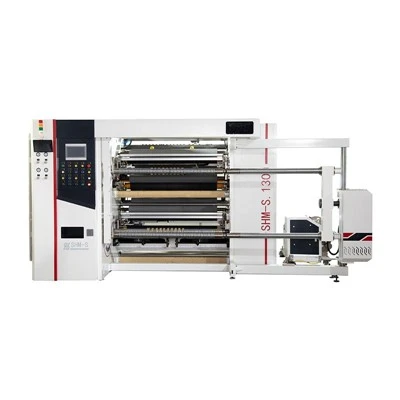
Let’s start at the very beginning, before the foil even touches the rewinding machine. Most people don’t realize that the condition of the parent roll going into the rewinder directly impacts the final product. Foil rolls arrive from rolling mills or prior processing steps with their own set of flaws: tiny wrinkles, edge burrs, or even light scratches that can magnify during rewinding if left unaddressed. That’s why a Shaftless Unwinder with Active Roll Alignment is non-negotiable. Shaftless unwinders eliminate the time-consuming step of mounting heavy, bulky shafts onto the rewinder, cutting setup time by up to 70% compared to old-style shafted unwinders. But more than that, active roll alignment uses laser sensors to keep the parent roll perfectly centered as it unwinds. Misalignment here is a top cause of edge trim waste, which can add up to thousands of dollars in lost foil over a year for a mid-sized plant. I’ve had customers tell me they tried to save money by using a manual guide instead, only to end up wasting 12% of their foil every shift. When you’re working with thin aluminum foil or specialty foils like copper, tin, or even polymer-coated foil, every inch counts.
Next, you need a Web Cleaning System immediately after the unwinder. Foil, even when it looks pristine, carries microscopic contaminants left over from rolling, handling, or storage. Dust, oil residue, and loose particles can stick to the foil and cause defects in downstream processes—think lamination adhesion failures or gaps in packaging seals. There are a few types of web cleaning systems, and the right one depends on your foil thickness and material. For thin foils (under 0.005 mm), a static neutralizer paired with a soft foam cleaning roll is enough: the neutralizer dissipates static electricity that attracts dust, and the foam roll traps particles without scratching the foil. For thicker or high-value specialty foils, a dual-brushes system with a vacuum pick-up after each brush ensures even the smallest contaminants are removed. Last year, a customer who makes blister packaging for pharmaceuticals switched from skipping web cleaning to adding our standard system, and their defect rate from foil contamination dropped by 82%. That’s a return on investment most auxiliary equipment can match.
Once the foil is clean and aligned, you need to prepare it for rewinding. This is where Edge Trimmers and Slitting Blades come in. Most parent rolls of foil are wider than the final rolls you need, so slitting them to the correct width is a core function of rewinding—but it’s not as simple as cutting a roll with a knife. Edge trimmers serve two purposes: they remove uneven, burr-edged edges from the parent roll, which prevents those burrs from damaging other rolls during storage, and they trim off any waste to make the final roll edges straight. For blades, the choice between circular shear blades and razor blades depends on your foil material. Circular shear blades are ideal for thick aluminum foil (0.01 mm and up) because they create a clean, burr-free cut without tearing. Razor blades work better for ultra-thin foils, where the clean edge of a shear blade can cause the foil to stretch or deform. I always advise customers to invest in high-carbon steel or tungsten carbide blades—cheap, disposable blades might save a few dollars upfront, but they dull after just a few thousand cuts, leading to jagged edges and more defects. One customer I worked with was changing blades every 2 weeks, compared to our recommended 6 months, just because they used inferior blades. The downtime and defect cost added up to more than the price of quality blades in a single quarter.
Another often overlooked piece is a Tension Control System. Foil is extremely sensitive to tension: too tight, and it will stretch or snap mid-process; too loose, and it will wrinkle or slide on the core, leading to uneven winding. A modern foil rewinding line doesn’t rely on manual tension adjustment—this is where closed-loop tension control comes in. The system uses load cells on both the unwinder and rewinder to measure tension in real time, adjusting the speed of each roll to maintain a consistent tension from start to finish, even as the unwind roll gets lighter and the rewind roll gets heavier. For narrow finished rolls, tension consistency is critical for downstream processes like printing or laminating. I once had a customer who manufactured foil labels for food packaging, and they were seeing 15% of their labels have misaligned print because the winding tension fluctuated. Adding a closed-loop tension control system fixed that overnight. It’s also a safety feature: if the foil snaps, the system automatically shuts down the rewinding machine, preventing further damage to the foil or the equipment.
As the foil gets closer to being wound onto the core, you need a Roll Inspection Station. This is where you catch defects that slipped past earlier steps, like scratches, holes, or wrinkles, before the finished roll goes to the warehouse. Inspection stations use high-resolution cameras and LED lighting to scan the foil web at speeds up to 1,000 feet per minute, flagging any flaws that exceed your predefined tolerance. Some systems even have automatic reject mechanisms that cut out the defective section of foil or mark it with a label so it can be removed later. For customers producing high-quality foil for medical or aerospace applications, this equipment is non-negotiable. A few years ago, a manufacturer of aluminum foil for battery current collectors was shipping defective rolls because they had no inspection system, and they ended up recalling a batch of 100,000 batteries. Adding an inspection station cost them $25,000, but it prevented a $200,000 recall and protected their brand reputation. It’s not just a quality control step—it’s a risk mitigation tool.
Then there’s the rewinding core handling system. Most operators just load cores by hand, but as rewinding speeds increase, manual loading becomes inefficient and can cause misalignment of the core. A Automatic Core Loader/Unloader matches the size and type of cores you’re using, loading them onto the rewinder spindle in seconds, and ejecting the finished roll once it’s complete. This not only cuts setup time but also ensures the core is perfectly aligned, which prevents winding defects. For high-volume lines, some systems even handle core feeding, roll transfer, and palletizing in a single automated package. That reduces the number of manual laborers needed, which is a big plus as labor costs continue to rise across the industry. I’ve had small-scale manufacturers tell me they thought these systems were too expensive, but after adding an automatic loader, they reduced labor for the rewinding line by two full-time employees, paying off the equipment in less than 18 months.
Finally, you can’t forget the Safety and Maintenance Auxiliaries. Rewinding machines run at high speeds, and the foil is sharp enough to cause serious injury if operators are not careful. Guards, emergency stop buttons placed at every accessible point, and safety interlocks that shut down the machine if a guard is opened are essential. But I’ve seen many customers cut corners here, only to face OSHA fines or workplace accidents. On the maintenance side, a lubrication system designed specifically for foil rewinding machines ensures that spindles, slitting blades, and tension rollers are properly lubricated on a schedule, extending the life of your equipment and preventing unplanned downtime. Many of the machines I supply come with a predictive maintenance module that alerts operators when parts need to be replaced, before they fail. This avoids the costly surprise of a machine going down mid-shift.
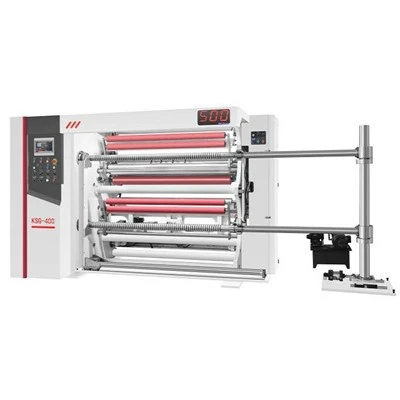
Now, let’s talk about how all these pieces work together. A foil rewinding machine is only as effective as the auxiliary equipment that supports it. Skip the web cleaner, and you’ll have contamination defects. Skip the accurate tension control, and you’ll have uneven winding. Skip the core loader, and you’ll waste time on manual setup. Over the years, I’ve helped hundreds of customers design rewinding lines that fit their specific needs—whether they’re rolling 1-foot wide foil for small specialty packaging or 6-foot wide foil for large laminating lines. No two operations are exactly the same, so the right mix of auxiliary equipment will depend on your foil type, your production volume, and your quality requirements.
Paper Rewinder Machine If you’re currently using a foil rewinding machine that’s underperforming, or you’re planning to invest in a new line and want to make sure you’re not missing any critical pieces, I’d be happy to walk you through what will work best for your operation. Auxiliary equipment doesn’t have to be overwhelming—we can tailor a package that fits your budget and your long-term goals. Contact me to discuss your requirements, and we’ll put together a solution that boosts your efficiency, cuts waste, and helps you deliver consistent, high-quality foil rolls.
References
- Flexible Packaging Association. (2022). "Cost Reduction in Foil Processing: Waste Mitigation Strategies." Industry Best Practices Report.
- International Standards Organization. (2021). "ISO 15753: Metallic Foil – Terms and Definitions for Processing Equipment." ISO Press.
- Metal Processing Machinery Association. (2023). "Auxiliary Equipment for Web-Handling Lines: Efficiency and Quality Impacts." Annual Technical Report.
- Food and Drug Administration. (2022). "Quality Control Guidelines for Pharmaceutical Foil Packaging." FDA Industry Guidance.
Wenzhou Sanhui Machinery Manufacturing Co., Ltd.
Wenzhou Sanhui Machinery Manufacturing Co., Ltd. is one of the most professional foil rewinding machine manufacturers and suppliers in China. We have world-leading production equipment and strong manufacturing capabilities. Please feel free to wholesale advanced foil rewinding machine made in China here from our factory. Customized orders are welcome.
Address: B17-8, Mechanical Industry Park, Wanquan Light Industry Production Base, Wanquan Town, Pingyang County, Wenzhou City, Zhejiang Province
E-mail: sanhui.slittingmachine@gmail.com
WebSite: https://www.sanhuislittingmachine.com/
