When I started my career as a disposable urine bags supplier over seven years ago, I underestimated how much confusion surrounded the simple question: Are disposable urine bags compatible with catheter use? Back then, a nurse would call our office and ask if our standard night drainage bags worked with the indwelling catheters she inserted for elderly patients in her care facility, and I’d fumble through a partial answer based on what our manufacturing team had told me. Over time, as we’ve refined our products and fielded thousands of questions from clinicians, home health aides, and even patients managing their own catheter care, I’ve learned that compatibility isn’t a yes-or-no topic—it’s a nuanced, critical detail that affects patient comfort, infection risk, and product performance. Today, I want to break down what we’ve learned, why compatibility matters, and what you need to know when pairing disposable urine bags with catheters. Disposable Urine Bags
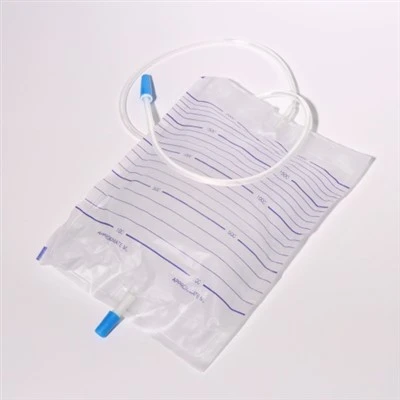
Let’s start with the basics, because even experienced clinicians sometimes mix up terminology. Disposable urine bags for catheter use fall into two main categories: night drainage bags (the large, wall-mounted or bed-side bags used for overnight extended drainage, usually holding 2000mL or more) and leg bags (smaller, lightweight bags worn throughout the day to allow mobility, typically 500mL to 1000mL). Catheters, meanwhile, are categorized by type: indwelling (Foley) catheters, external (condom) catheters, and intermittent catheters. Each of these connects to urine bags differently, and that’s where compatibility gets tricky. For indwelling catheters, the standard is a 14 French (Fr) or 16 Fr connector on the catheter tip—this is the universal size that most disposable urine bags are designed to fit, right? For a long time, that’s what I assumed, too. But a few years back, we had a major problem: a regional hospital reported a spate of accidental disconnections during nighttime, which led to urine spills, one case of a urinary tract infection (UTI), and several complaints from patients who woke up soaked through their hospital gowns. Our team got on a plane to meet the infection control nurse there, and she showed us the bags they were using: a generic night drainage bag from a company that didn’t specify connector size, paired with standard 14 Fr Foley catheters. We tested the connection ourselves, and sure enough, the female end of the bag’s connector was slightly too loose for our compatible bags, and the generic brand’s connectors were too tight for a small subset of newer catheter models with tapered tips. That moment taught me a huge lesson: compatibility isn’t just about fitting a standard size—it’s about precision engineering for real-world use.
Another big piece of the puzzle is infection prevention, which is non-negotiable when working with urinary catheters. The CDC estimates that over 700,000 UTIs are linked to indwelling catheters every year, and improper connection between a catheter and a urine bag is a major risk factor. If the connection isn’t airtight, bacteria can get into the urinary tract through the open junction, even if caregivers are careful to clean the area before connecting. We worked with a university hospital’s microbiology lab a few years ago to test our disposable bags vs. three competing brands, using common catheter models from different manufacturers. The results were eye-opening: when connected correctly, our bags had zero bacterial contamination at the connector after 24 hours of use, while two of the generic bags had detectable E. coli in the junction area within 12 hours. Why? Because we use a molded, silicone-coated connector that creates a vacuum seal when snapped into place, instead of the cheaper rubber gaskets that most low-cost bags use. That silicone coating also prevents the connector from sticking to the catheter, which means no accidental tearing when disconnecting to empty the bag—another common source of contamination. I’ve heard stories from home health aides who come in twice a day to help elderly patients change leg bags, and they’ll tell you that the last thing they need is to spend 10 minutes prying a stuck connector off a catheter, especially if the patient is frail and can’t stay still. Our compatible bags are designed to release easily with a simple twist, no force required, which cuts down on both patient discomfort and infection risk.
Of course, not all catheter use is the same, so compatibility has to adapt to different patient needs. For example, external catheters (condom catheters) are used for men who can’t use indwelling catheters, often to avoid UTIs and discomfort. Pairing these with disposable urine bags requires a different connector setup than indwelling catheters. A few years ago, we got a lot of questions from urology clinics about leg bags that worked with both standard indwelling catheters and external catheters with their own collection tubing. Our R&D team spent six months testing different connector adapters, and now we offer a dual-compatibility leg bag that works with 14 Fr Foley catheters and the 22 Fr tubing that most external catheter brands use. That’s a big deal for patients who switch between overnight and day use, or who have different catheter needs depending on their mobility. We also work closely with pediatric urology teams, who have unique needs for smaller catheters (10 Fr and 12 Fr) that standard adult bags don’t fit. Early on, when we tried to design a pediatric disposable bag, we discovered that generic small bags had connectors that were too narrow for pediatric catheters, leading to leaks. Now, our pediatric line has a tapered male connector that fits both 10 Fr and 12 Fr catheters, tested by over 20 pediatric clinics to ensure no leaks and no disconnections.
I know a lot of suppliers talk about “universal fit,” but I want to be honest: there’s no such thing as a truly universal disposable urine bag. Every catheter brand has slight variations in connector size, tip shape, and tubing diameter. That’s why we’ve started including a compatibility chart on every product page, and why our customer service team doesn’t just answer “yes” or “no” when someone asks if a bag works with their catheter—we ask for the catheter brand and model number, and then confirm if our bag is a match. Last month, a patient in their 80s reached out to us, frustrated because the leg bag they’d bought at a local pharmacy kept leaking when they walked around their apartment. She’d been using a 14 Fr Bard Foley catheter, and the pharmacy’s bag had a connector that was too short to reach the catheter’s tip. We sent her a free sample of our compatible leg bag with an extended connector, and she called us a week later to say she hadn’t had a leak since. That’s the work that matters to me—this isn’t just selling a product, it’s making sure that patients and caregivers have the right tool to make catheter use less stressful.
Another common misconception is that disposable bags are only for short-term use, so compatibility is less important. But for patients who use catheters long-term—like people with spinal cord injuries, or those with chronic urinary retention—they use disposable urine bags every single day, sometimes for years. In those cases, a bad connection can lead to more than just leaks: it can cause skin irritation from constant urine on the skin, which can turn into painful pressure ulcers for people who are immobile. We’ve had long-term patients tell us that our leg bags’ soft connectors don’t rub against their thighs the way stiffer connectors do, which is a huge difference for people who wear the bags 12 or more hours a day. That’s a design choice we didn’t anticipate early on—we thought compatibility was just about fitting, but it’s also about how the bag interacts with the catheter and the patient’s body.
I want to address a concern that I hear a lot from small clinic owners and home health care providers: cost. Disposable bags that are specifically compatible with catheters sometimes cost a little more than generic brands, but when you factor in the cost of treating a UTI, cleaning up urine spills, and replacing catheters that get damaged from forceful disconnections, it’s actually cheaper in the long run. A few years ago, a small nursing home in rural Ohio switched from generic compatible bags to ours, and their infection control nurse told us that catheter-related UTIs dropped by 40% in six months. They also stopped having to replace so many catheters, because the loose connectors from generic bags were pulling on the catheter tips and causing tears. That’s a return on investment that’s hard to ignore, and it’s why we work with clinics to offer bulk pricing that’s accessible for small care facilities.
Now, I know this has been a lot of detail, but I want to wrap this up with what matters most: when you’re pairing a disposable urine bag with a catheter, compatibility should be your top priority, not an afterthought. It’s not just about whether the connector fits—It’s about preventing infections, reducing patient discomfort, making care easier for clinicians and home aides, and avoiding costly mistakes. As a supplier who’s been in this space for years, I can tell you that not all disposable urine bags are created equal, and the ones that aren’t designed for catheter use are putting patients at unnecessary risk.
If you’re a clinician, a clinic manager, a home health agency owner, or a patient looking for the right disposable urine bags to pair with your catheters, we’re here to help. We can answer any questions you have about connector sizes, dual compatibility, pediatric options, or bulk pricing, and we can provide product samples to test with your specific catheter models.
Disposable Urine Bags References
- Centers for Disease Control and Prevention. (2022). Catheter-Associated Urinary Tract Infections (CAUTI): Prevention Strategies. Retrieved from clinical guidelines for acute and long-term care settings
- American Urological Association. (2021). Clinical Practice Guidelines for Urinary Catheterization in Adults. Retrieved from standards for catheter and drainage bag compatibility
- Journal of Wound, Ostomy, and Continence Nurses. (2020). Skin Complications Related to Improper Drainage Bag-Catheter Connections. Retrieved from peer-reviewed research on infection and skin damage risks
- Manufacturer’s Technical Manual. (2023). Disposable Urine Bag Connector Standards for Indwelling and External Catheters. Retrieved from product testing data for universal and model-specific compatibility
Shandong Zhushi Pharmaceutical Group Co., Ltd.
Shandong Zhushi Pharmaceutical Group Co., Ltd. is one of the most reliable disposable urine bags manufacturers and suppliers in China, featured by quality products and good price. Welcome to wholesale CE approved disposable urine bags made in China here from our factory. Contact us for customized service and pricelist.
Address: No 6th Food And Drug Industry Park Economic and Technological Development Zone, Shan County 274300 Heze, Shandong People’s Republic of China
E-mail: admin@cnzhushigroup.cn
WebSite: https://www.zhushimed.com/
