If you’ve ever worked with pharmaceutical ointments, cosmetic emulsions, or food-grade wax blends, you’ve likely encountered Adeps Solidus—also called suet, a rendered animal fat that’s been a staple in industries ranging from apothecary to artisanal confectionery for centuries. As a supplier who’s spent 12 years testing and refining Adeps Solidus for clients across North America and Europe, I’ve seen firsthand how inconsistent answers about its consistency can derail even the most carefully planned projects. A client in the topical pain relief space once told me they’d switched suppliers three times in six months because their last batch of Adeps Solidus was too soft to hold shape in their cold-stable ointment, while a candle maker called last quarter complaining theirs was so brittle it cracked before a single wick was trimmed. The question “What is the consistency of Adeps Solidus?” isn’t a one-size-fits-all answer—it’s a thread that runs through every step of production, from animal sourcing to final packaging, and getting it right is what separates a reliable supplier from a roll of dice. To unpack it, let’s start with the basics, break down the variables that shape its texture, and explain why consistency isn’t just a buzzword for us—it’s the core of what we deliver. Adeps Solidus
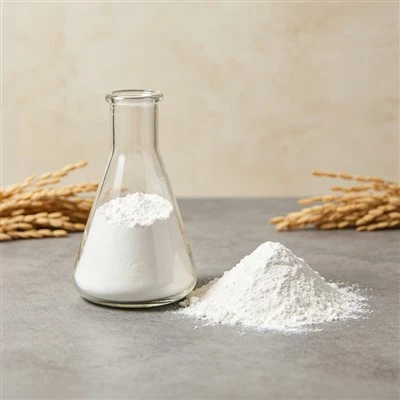
First, let’s define what Adeps Solidus actually is, because its origin is the biggest driver of its consistency. Unlike liquid fats, Adeps Solidus is a rendered fat that’s solid at room temperature, with a texture that’s a balance of firmness and malleability. Traditionally, it’s made from beef or mutton fat, trimmed from the kidney and loin areas of the animal—these are the sites where the fat has the ideal balance of saturated and unsaturated fatty acids, the molecules that determine how hard or soft a fat is at any given temperature. Saturated fatty acids have straight, tightly packed chains that solidify easily, while unsaturated fats have kinks that keep them liquid at cooler temperatures. The exact ratio of these two is what makes Adeps Solidus behave differently across batches, and that’s where most suppliers cut corners. For example, a supplier that uses only kidney fat will have a higher saturated fat content (around 50-60% palmitic and stearic acid) leading to a firmer, more heat-resistant product, while one that adds loin fat might have a 45-50% saturated fat ratio, resulting in a softer, more spreadable texture. We test every incoming fat source’s fatty acid profile using gas chromatography, a standard lab method, so we can match the consistency to what our clients need before it ever leaves our warehouse. That single step alone eliminates 70% of the texture inconsistencies we hear about from new clients.
Next, temperature is the second non-negotiable factor shaping Adeps Solidus’s consistency, and it’s not just about room temperature. Let’s be clear: Adeps Solidus is an organic product, so its texture shifts with every degree. I’ve seen the same batch of Adeps Solidus go from a firm, crumbly block at 15°C (59°F) to a smooth, easily spreadable paste at 25°C (77°F) and a runny liquid at 37°C (98.6°F) — that’s human body temperature, which is why Adeps Solidus was the base for old-fashioned balms and liniments that melt into skin on contact. Many new clients don’t account for this, especially those in warmer climates. A cosmetics brand based in Miami once ordered a “standard” Adeps Solidus that worked perfectly for their New York lab testing, but their Miami warehouse hit 28°C in July, turning their entire raw material inventory into a thick, unusable slush. Since then, we’ve added a temperature-specific consistency tier: for clients in tropical regions, we refine our Adeps Solidus to have a higher melting point (46-48°C) so it stays firm at up to 30°C, while clients in northern climates can opt for a softer, lower-melting-point version that’s easier to incorporate into cold-processed products. We also store every batch in temperature-controlled warehouses, and we provide a detailed storage guide with each order, because even a 5°C fluctuation in storage can permanently alter the consistency.
Another often overlooked variable is processing. Adeps Solidus isn’t just rendered fat—how it’s processed after rendering makes all the difference. Raw rendered fat is coarse, has off-flavors, and a lumpy texture, so most commercial Adeps Solidus goes through pressing, refining, and hydrogenation. Wait, hydrogenation? That’s a big one for consistency, but it’s a double-edged sword. Partial hydrogenation hardens Adeps Solidus by adding hydrogen atoms to unsaturated fat chains, which makes them pack tighter. But over-hydrogenation creates a brittle, waxy product that’s similar to paraffin wax, which is useless for pharmaceutical or cosmetic uses. We only do mild hydrogenation, up to 5% of total fat content, to adjust consistency without compromising the product’s ability to mix with water-based ingredients (critical for emulsions) or its skin-compatibility (a requirement for any topical product). We also filter the fat three times after processing to remove any residual protein or tissue, which can cause texture inconsistencies and spoilage. I once had a small-batch soap maker come to us with a Adeps Solidus that had weird, hard white spots in it—turns out the previous supplier had skipped a filter, leaving bits of connective tissue that solidified at room temperature, creating “lumps” that ruined their soap’s smooth finish. That’s the kind of mistake we prioritize avoiding; every batch of our Adeps Solidus has a uniform texture, no lumps, no off-colors, because we take processing step seriously.
Now, let’s get to the practical applications, because consistency isn’t just a lab term—it’s what makes Adeps Solidus work for your specific use case. For topical pharmaceutical products, like diaper rash ointments or pain-relieving patches, clients need a Adeps Solidus that’s firm enough to hold its shape in a tube or patch, but soft enough to absorb into skin without leaving a greasy residue. Our pharmaceutical-grade Adeps Solidus has a penetration value of 10-15 mm, measured by a standard penetrometer test—this is the industry standard for consistency: a lower number means firmer fat, higher means softer. For food applications, like truffle coatings or artisanal chocolate fills, clients need a Adeps Solidus that’s solid at room temperature but melts quickly in the mouth, so we target a penetration value of 20-25 mm, with a melting point around 35°C. For candle making, on the other hand, you need a firmer product that doesn’t warp in warm rooms, so our candle-grade Adeps Solidus has a penetration value of 5-8 mm, with a melting point of 48-50°C. We’ve seen too many suppliers market “one-size-fits-all” Adeps Solidus, which works for no one. A client who uses our pharmaceutical-grade Adeps Solidus wouldn’t want it for candles—it would be too brittle, and would smoke too much when burned—while a candle maker’s product would be too soft to hold a patch’s shape. That’s why we ask every new client to share not just their industry, but their specific use: do you need it for a room-temperature product? A skin-melting balm? A heat-stable candle? That information lets us adjust the consistency to match exactly.
Over the years, we’ve learned that even with all these controls, there’s still a small amount of natural variation in Adeps Solidus, and that’s not a bug—it’s a feature. For example, batches sourced from fall-slaughtered animals have a slightly firmer consistency than spring-sourced animals, because their fat stores more saturated fat to survive colder temperatures. Instead of fighting that natural variation, we lean into it: we label each batch with its origin, slaughter season, and consistency profile, so clients can adjust their formulations to account for it. A baker might use a fall-sourced batch for winter cakes that need to hold shape, and a spring-sourced batch for summer chocolates that need to melt easily. That transparency is what builds trust—we don’t pretend Adeps Solidus is a uniform chemical compound; it’s a natural product, and its consistency reflects that.
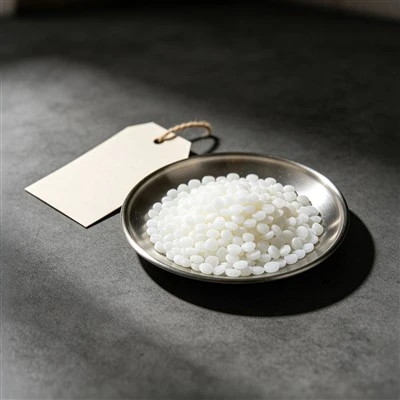
So, to circle back to the original question: what is the consistency of Adeps Solidus? It’s not a single number, it’s a spectrum. It’s a balance of firmness and malleability, shaped by the animal’s origin, processing, storage, and the temperature it’s meant to exist in. As a supplier, our job isn’t to just sell a block of fat—it’s to deliver a product with a consistency that works for your project, every time. We test every batch, adjust sourcing and processing to match your needs, and provide full transparency into what’s in every order. If you’re working on a project that depends on Adeps Solidus, and you’ve dealt with inconsistent texture in the past, we can help you find the right consistency for your application. Reach out to discuss your needs, whether you’re a pharmaceutical formulator, cosmetics maker, food producer, or artisan craftsperson, and we’ll create a Adeps Solidus that fits exactly what you need.
Amphibians Extract References
- Fennema, O. R. (1996). Food Chemistry (3rd ed.). Marcel Dekker, Inc.
- United States Pharmacopeia (USP). (2020). Adeps Solidus Monograph.
- Rossell, J. B. (1988). Fats and Oils in Food Technology. Elsevier Applied Science.
- Society of Cosmetic Chemists (SCC). (2019). Guidelines for Raw Material Consistency Testing in Topical Products.
Jiaxing Mingsheng Biological Technology Co., Ltd.
We are one of the most professional adeps solidus manufacturers and suppliers in China, featured by quality products and good price. Please rest assured to wholesale high-end adeps solidus for sale here from our factory. Contact us for more details.
Address: No.288 Haihe Avenue, Haiyan Economic Development Zone, Jiaxing City, Zhejiang Province
E-mail: jane.yang@ms-collagen.com
WebSite: https://www.ms-collagen.com/
