Hey there, if you’ve been in the mold making or injection molding game for more than five minutes, you know quick couplings are the unsung heroes of keeping production lines moving. I’m Jake—been selling mold hydraulic quick couplings for over 12 years, and I’ve seen every mistake, every stuck coupling, and every messy disconnect that’s made entire presses go down. Today I’m breaking down how to actually connect and disconnect these things right, no fancy engineering jargon, just stuff I’ve learned from shop floors and troubleshooting calls. Let’s cut to the chase. Mold Hydraulic Quick Couplings
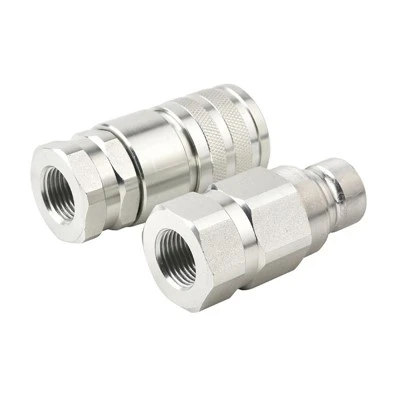
First, let’s get one thing straight: mold hydraulic quick couplings aren’t the same as the ones you use for air hoses or garden tools. They’re built for high-pressure hydraulic fluid—think 1,000 PSI and up, because molds need that steady pressure to actuate slides, ejectors, cooling lines, you name it. Mess this up, and you’ll either leak hydraulic fluid everywhere (a huge mess, plus wasted product) or damage the coupling so bad you’ll need a replacement before your next run. I once had a customer who skipped checking for gunk, forced a connection, and snapped a valve popper inside the coupling mid-production. Cost them $8,000 in downtime alone. That’s the kind of story I live for, and the reason I walk every new client through this step by step.
Let’s start with connecting, because that’s usually where people rush the most. I’ve seen techs grab the coupling, yank it on, and cross their fingers 100 times. Don’t do that. Here’s the actual play-by-play, simplified:
-
Prep everything first. Stop. Don’t just grab the coupling. Grab a lint-free rag (shop rags work but avoid fuzzy ones) and wipe the end of both the male and female coupling hard. I don’t care if it looks clean—mold shop floors are dusty, there’s metal shavings, mold release gunk, all kinds of crud that will get between the seals and ruin the connection. Check the O-ring too, while you’re at it. If it’s cracked, flattened, or has a tiny slice, replace it. I keep a pack of spare O-rings in my truck for just this—way cheaper than a whole new coupling. Oh, and make sure the hydraulic line’s pressure is zero. I don’t care if the press is off; old pressure can build up. Bleed it if you have to. No pressure means no unexpected squirts when you connect.
-
Align it straight. Hold the male coupling dead-on with the female, no angle. If it’s even a little crooked, forcing it will damage the sealing faces or bend the valve stems inside. I’ve had guys try to connect them from the side and snap the male valve clean off—had to send them an expedited shipment, cost me extra, and cost them more downtime. Take two seconds to line it up. It should slide on like a glove, no effort. If it’s not sliding easily, stop and check for gunk or a bad O-ring. Don’t use a wrench to force it.
-
Lock it in. Almost all mold hydraulic couplings have a locking collar—you’ll see a ring at the base of the female coupling that you slide forward (or back, depending on the brand, but the instructions are usually molded right on it). Once the coupling is fully seated, push that collar until it clicks. Give the male coupling a tiny tug to make sure it’s not coming loose. If it moves, it’s not locked, and that’s a leak waiting to happen. One pro tip: I always do a quick visual after locking—peek at the gap between the male and female ends. If there’s a big gap, you didn’t seat it right.
Now for disconnecting, which is where the horror stories get real. Most people yank the coupling off like they’re pulling a stuck Band-Aid, and that’s how you get hydraulic fluid spraying in your face (trust me, that’s not fun—it’s sticky, it smells, and it’s hard to get off your hands for days) or damage the coupling valves. Here’s how to do it safely and correctly:
-
Relieve pressure first. I can’t stress this enough. If the line has pressure, disconnecting is like opening a soda can without the tab—fluid comes shooting out. Turn off the pump, shut off the valve on the line, and hit the bleed button if your press has one. If you don’t have a bleed button, slowly loosen the nut on the line end a quarter turn to let any trapped pressure escape. Do this over a rag, not directly onto the floor.
-
Release the locking collar. Don’t just yank the collar. Depress or slide it fully, all the way. Most collars have a little notch or a detent that you have to line up to release. I once watched a tech jam a screwdriver into the collar to force it, and that bent the collar so bad the coupling wouldn’t lock again. It was a $100 part, but because he forced it, he had to shut down the entire line for a couple hours waiting on a replacement. Take 2 seconds, push the collar all the way, no tools.
-
Pull straight, steady. Once the collar’s released, don’t yank or twist the coupling. Pull it straight back, in line with the line, so the valve stems retract evenly. If you twist it, you’ll scratch the sealing faces and cause leaks next time. If it’s stuck, don’t yank hard. Wiggle the collar a tiny bit (to make sure it’s fully released) and pull again. Still stuck? Wipe the ends and check for crud blocking the valve. Never use pliers or a wrench to pull it—you’ll damage the body.
Wait, but what about when it’s hot? I get that—mold molds get hot, hydraulic lines warm up, so couplings can be too hot to touch sometimes. I tell my guys to wait 5 minutes after shutting down, or if they have to disconnect fast, use a heat-resistant glove, not a work glove that will melt. I’ve seen a guy use a paper towel and burn his hand so bad he missed a whole week of work. Not worth it.
Also, let’s talk about common mistakes I see that mess up connections long-term. First, using mismatched couplings. Just because a male coupling fits a female one from a different brand doesn’t mean it’s compatible. I’ve had a customer order a cheap off-brand male coupling to fit a standard female, and the seal only lasted 20 runs. The pressure rating’s different, the O-ring size is off, it’s a bad match. Always stick to couplings designed for the exact mold you’re working on— that’s why we stock specific ones for injection molding, blow molding, and even custom mold applications. Another mistake: not checking for debris after disconnection. When you pull a coupling, the female end’s valve opens a tiny bit, and if there’s gunk on the male end, it’ll get pushed inside the female. I always wipe both ends after disconnecting, even if the next connection is right away.
Oh, and what about when you’re storing couplings? A lot of guys just leave them lying on the shop floor, open end up. Dirt and metal shavings get in, and next time you connect, you scratch the seal. If you’re not using a coupling, put the protective caps on both ends. That’s a 50-cent step that saves you hundreds in damage.
Let me share a recent example to make this real. Last month, I got a frantic call from a plant in Detroit. Their press went down for 2 hours because a tech forced a coupling connection, and the valve popper broke inside the female coupling. They’d rushed the job, skipped wiping the ends, just muscled it on. By the time I got there, the coupling was leaking so bad the floor was slick, and they were behind on a big order. I brought a replacement coupling, walked the lead tech through connecting it right, and explained where he went wrong. We also left a pack of spare O-rings and a roll of caps for him—turns out he didn’t know those little caps even existed. That’s the kind of thing I’m here for, not just selling parts, but making sure you use them right so you don’t waste time and money.
Now, if you’re wondering about high-pressure vs. low-pressure, wait—you might think lower PSI means you can be sloppier, but no. Even 500 PSI will leak if you connect a coupling wrong, and the seals will wear out way faster. The same steps apply across the board, no matter the pressure rating. We make couplings rated for up to 5,000 PSI too, and the connect/disconnect process doesn’t change a bit—though I will say, for those high-pressure ones, checking the O-ring is even more important, because a leak at 5,000 PSI is way worse than at 1,000.
Another thing: don’t reuse couplings if they’re damaged. If you scratch the sealing face, or the locking collar is bent, or the O-ring’s torn, replace it. I see guys try to “get one more run” out of a busted coupling, and that always ends up costing them more downtime. We stock replacements same-day for most of our standard lines, so it’s not a hassle to swap it out.
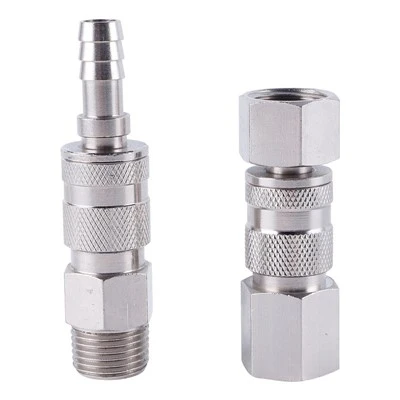
At the end of the day, connecting and disconnecting mold hydraulic quick couplings isn’t rocket science. It’s just about slowing down, checking for gunk, aligning straight, locking fully, and relieving pressure before disconnecting. The little 10-second steps I walked you through save you hours of downtime, hundreds in wasted fluid, and prevent those messy, dangerous leaks.
Push Lok Fittings If you’re tired of dealing with stuck couplings, random leaks, or replacements that don’t fit right, reach out. We stock a full line of mold hydraulic quick couplings, from standard to custom, and we don’t just send you parts—we walk you through the right way to connect, disconnect, and maintain them. No jargon, no hidden fees, just actual solutions for your shop floor. Hit us up whenever you’re ready to grab new couplings or fix the ones you’ve been messing up.
References
- Mold Fluid Power Association. Guide to Hydraulic Coupling Maintenance for Injection Molding. 2022.
- Quick Coupling Manufacturers Association. Best Practices for Connecting Disconnecting High-Pressure Hydraulic Couplings. 2021.
- Industrial Maintenance Magazine. Common Mistakes in Hydraulic Coupling Handling and Repair. 2023.
Cixi Poolke Hydraulic Pneumatic Co., Ltd.
Cixi Poolke Hydraulic Pneumatic Co., Ltd. is one of the most professional mold hydraulic quick couplings manufacturers and suppliers in China, also supports customized service. Please feel free to wholesale the newest mold hydraulic quick couplings made in China here from our factory. Quality products and reasonable price are available.
Address: #88 Zhengtong Road, Kandun Industrial Park315303, Cixi, Zhejiang, China
E-mail: contact@poolke.com
WebSite: https://www.poolkecouplings.com/
