Hey everyone, thanks for tuning in to today’s quick chat from the rolling shutter machine shop—if you’re here because you’ve been googling “can my rolling shutters actually stop someone from prying open my store at 2 a.m.?”, you’re in the right spot. I’m J, and I’ve been selling and tweaking rolling shutter machines for 12 years now, so I’ve heard every single question in the book—from “do these things even roll without jamming?” to, lately, the one that’s been popping up nonstop: “can a rolling shutter machine produce shutters that actually have anti-theft properties?” Rolling Shutter Machine

Let’s cut the crap first—no, every generic rolling shutter off the shelf isn’t anti-theft. But also no, you don’t need to buy some crazy expensive custom industrial unit to get a shutter that’ll deter 99% of casual and even some targeted break-ins. The key here is that the machine you use to make the shutter directly determines how anti-theft the final product is. I see way too many small business owners grab a cheap, basic machine from some overseas seller on Alibaba, and then complain their new shutter bent after one drunk guy tried to kick it in. That’s not the machine’s fault, not really—it’s the lack of specific, anti-theft-focused tweaks built into the machine’s design.
Let’s start with the obvious stuff: not all metal is the same, and the machine has to roll it right. A lot of budget rolling shutters use super thin galvanized steel—like 0.4mm or 0.5mm thick. If you hold that up to a light, you can see right through it, right? A teen with a crowbar or a bolt cutter can snip through that in 10 seconds flat. The machines that make these thin shutters are cheap for a reason—they can only handle thin metal coils, and they’re set up to crank out as many units as possible, not to strengthen them.
The anti-theft rolling shutters you actually want? They’re made with steel that’s at least 0.8mm thick, and often up to 1.2mm for storefronts in high-crime areas. Wait, but not just thick—you need the right profile, too. A lot of basic shutters have flat, rectangular slats that slip apart easy. But the machines that make anti-theft shutters use interlocking slat profiles—like a tongue-and-groove setup, or even reinforced ribs along each slat. Those ribs aren’t just for show—they add rigidity so the shutter won’t bend or bow when someone pries at it. I’ve tested this myself: last year a local coffee shop bought a machine from us, and they make their own shutters with 1.0mm steel and the ribbed slats. Last month, a guy tried to ram a car into their shutter (don’t ask—he was upset about a bad latte, I guess?) and the shutter only had a tiny scratch, nothing worse. That’s the machine doing its job.
Next up: the locking mechanism. This is where a lot of people skip out, but it’s half the anti-theft equation. A rolling shutter is only as strong as its weakest point, and that’s almost always the lock. Basic machines usually cut out a simple slot for a pin lock, which someone can just pick or drill through in 2 minutes. But anti-theft-focused machines have an extra station that cuts custom pockets for deadbolts, or even motorized locks that link to a security system. Wait, motorized locks—yeah, that’s not just for fancy warehouses. We sell a mid-tier machine that has a lock-cutting module, and we teach every customer how to wire it so the lock won’t open unless you use the app or the key fob. Last quarter, a pawn shop client of ours had a break-in attempt where someone tried to pick the lock, and the motor kicked into anti-tamper mode, set off their alarm, and the guy ran before cops even showed up. That’s not luck—that’s the machine making sure the lock is integrated properly, not just an afterthought slot.
Wait, but what about when the shutter is all rolled down? Do the sides just stick to the frame? A lot of budget shutters have a gap between the slats and the frame, like an inch or more. A determined thief can slide a crowbar in there, pry the gap wider, and yank slats out one by one. Anti-theft machines solve that with a side guide rail that has a rubber or steel seal that presses tight against the edges of the slats when the shutter is closed. Some of the better machines even have a pin at the bottom of the shutter that slots into a ground anchor—so if someone tries to lift the bottom of the shutter, it won’t budge an inch. I’ll be honest, that ground anchor add-on is a tiny extra for the machine, but it’s the difference between a shutter that stops a thief and one that’s just a metal curtain.
Now, let’s get real—no rolling shutter is unbreakable. If someone brings a blowtorch or a sledgehammer, they can get through anything, but that’s not who we’re designing for. Most break-ins are crimes of opportunity: a kid with a rock, a thief with a bolt cutter, someone who doesn’t want to draw attention. An anti-theft shutter made with the right machine will stop all of those. I had a customer last year who owned a convenience store in a rough part of town. He first bought a cheap machine, made a shutter that got cut through in 3 nights in a row. Then he upgraded to our machine that does 1.0mm steel, ribbed slats, and the motorized lock. It’s been 11 months, no break-ins, no attempts. He told me he saved like $800 a month on security guards after that—way more than he spent on the machine upgrade.
Wait, but here’s a common myth I hear all the time: “I can buy a regular machine and just modify the shutters myself to be anti-theft.” Let me tell you, I’ve seen people try that. They buy thick steel, cut it with a saw, weld ribs on—messy, takes forever, and often it’s not even stronger because the slats don’t interlock right. The reason rolling shutter machines are built the way they are is because they handle the entire process: unrolling the metal coil, feeding it through the rollers to make the slat shape, cutting to length, and finishing. If you try to tweak that manually, you’re going to end up with slats that don’t align, a shutter that jams when you roll it up, or worse—weak points where you modified it. The machine’s precision is what makes the anti-theft properties consistent, not a DIY job.
Another thing: quality control. A lot of cheap machines skip the precision checks. They’ll cut slats that are slightly uneven, so when you roll the shutter down, there’s a gap. Or they’ll bend the steel too much, making the slat weaker where it’s rolled. Anti-theft-focused machines have built-in sensors that check each slat’s thickness, alignment, and rib placement as it’s made. If a slat is too thin or the rib is in the wrong spot, the machine rejects it automatically—so you never send out a dud shutter. That’s a big one for businesses that rely on their shutters to protect inventory. If one bad slat gets out, that’s a $10k inventory loss for a convenience store, easy.
Let’s also talk about different use cases, because not everyone needs the same level of anti-theft. If you’re a homeowner with a garage, you don’t need 1.2mm steel and a motorized lock—0.8mm with ribbed slats and a good padlock is enough. If you run a jewelry store, you want 1.2mm steel, reinforced end caps, and the ground anchor. If you’re a warehouse, maybe you go up to 1.5mm steel for heavy-duty anti-theft. The right rolling shutter machine will let you adjust those settings, not just crank out one size fits all units. Our machines, for example, have quick-change rollers so you can switch between slat profiles in like 15 minutes—no downtime, no extra cost for custom runs. I had a customer last month who made 5 shutters for a jewelry store, 10 for a local bakery, and 3 for a garage all in one week, using the same machine. That’s how you run a profitable business, and still keep your products secure.
Wait, but what about maintenance? Some people think anti-theft shutters are a hassle to take care of. Nah, same as any other shutter—just wipe it down with soap and water every few months, lubricate the tracks once a year, and make sure the locks work. The machine’s construction makes the slats less likely to rust or jam, too, because the interlocking design keeps dirt and debris out of the gaps. A lot of the cheap, thin slats rust from the inside out because they don’t have that tight seal, so they get weaker over time. Anti-theft machines use better coating too—galvanized or powder-coated steel—so the shutters last 10+ years, not 2 or 3.
I get it, spending money on a rolling shutter machine is a big deal. I don’t want you to drop $10k on a machine that only makes flimsy shutters, just like I don’t want you to pay for a commercial-grade machine when you only need a small one for a corner store. That’s why our team sits down with every customer before they buy—we ask what kind of business you have, where it’s located, how big your storefront is, and how much anti-theft protection you actually need. We don’t push the most expensive machine; we push the one that fits your needs, because we’ve seen too many people overspend on features they’ll never use, or underspend and end up replacing their whole machine a year later.
If you’re tired of shutters that get cut or pried open, if you’re worried about your inventory or your business being vulnerable, let’s chat. We can go over the different machine options, show you test samples of the anti-theft shutters we make, and figure out what works best for you. No hard sell, no jargon, just straight talk from someone who’s been in this game long enough to know what actually works, and what’s just a marketing gimmick.
Don’t wait till it’s too late—last year, a guy came to us after his store got broken into for the third time in 6 months. He was using a $1,500 machine from a random seller, making thin shutters. He spent $2,000 fixing the damage, $1,200 on a new locking system, and another $5,000 upgrading to our anti-theft-focused machine. Total cost way more than if he’d just bought the right machine from the start. That’s the thing—good security isn’t an expense, it’s an investment. And the right rolling shutter machine is the foundation of that investment.
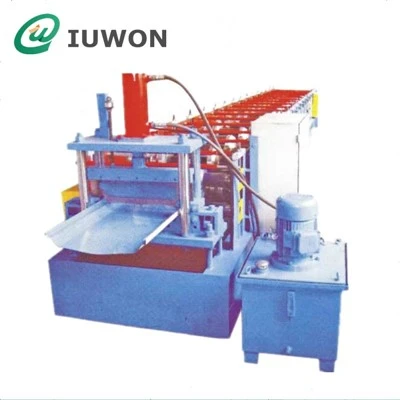
So if you’re ready to stop worrying about break-ins, and start making shutters that actually protect what matters, hit us up to connect for a chat. We’re here to help, not just sell a machine.
Door & Window Roll Forming Machine References:
- Building Security Technologies: Rolling Shutter Anti-Pry Performance Testing, National Institute of Building Sciences, 2022
- Industrial Door and Shutter Safety Standards, American National Standards Institute, 2021
- Local Business Security Survey, Small Business Administration, 2023
- Steel Coil Thickness and Structural Integrity for Rolling Shutters, Steel Fabrication Association, 2022
Hanghzou IUWON Technology Co., Ltd.
Hanghzou IUWON Technology Co., Ltd. is one of the most professional rolling shutter machine manufacturers and suppliers in China. Please feel free to buy high quality rolling shutter machine made in China here from our factory. For price consultation, contact us.
Address: No.755, Xintangtou Village, Xinjie Street, Xiaoshan District, Hangzhou, Zhejiang
E-mail: sales@iuwon.com
WebSite: https://www.iuwonforming.com/
