Hey there, if you’ve ever walked around a machine shop that’s humming with a vertical machining center (VMC) running 24/7, you’ve probably noticed a quiet, hardworking part tucked away at the base of the machine: the chip conveyor. You might not have paid it much attention, but let me tell you—this thing is the unsung hero of a VMC. I’m the guy who’s been selling VMCs for over a decade, working directly with shop owners, operators, and maintenance crews, and I can’t tell you how many times folks have come to me after ignoring their chip conveyor and ended up with a major headache. Let’s break down what it actually is, why you can’t run a good VMC without one, and the mistakes people make that cost them time and money. Vertical Machining Center
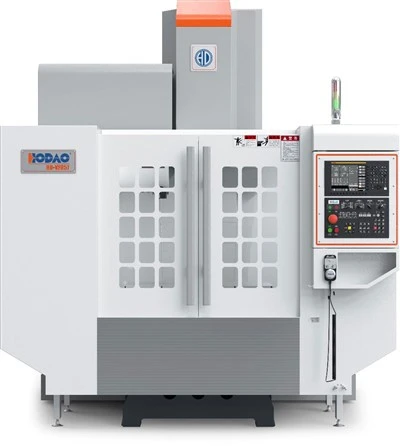
First off, let’s cut through the jargon. A chip conveyor (sometimes called a scrap conveyor, chip auger, or belt conveyor depending on the type) is a simple system built right into or attached to the bottom of a VMC’s work envelope. Its whole job is to scoop up all the metal shavings, chips, and swarf that comes off when the spindle cuts, mills, drills, or taps material. If you’ve ever watched a VMC in action, those chips aren’t just tiny bits—they can be long, stringy aluminum shavings that wrap around tools, or thick, hard steel chips that grind into anything they touch. Without a chip conveyor, those chips just pile up in the machine’s sump, mixed with coolant.
Now, why is this non-negotiable? Let’s start with the most obvious, but most ignored reason: tool life. Here’s a story that’s stuck with me. A customer of mine had a brand-new VMC, ran it for three months without a proper chip conveyor—just a lowly bucket under the machine that he emptied once a day. He kept breaking end mills left and right, spending thousands on tooling every month, and blamed it on cheap tooling or operator error. When we took a look under the hood, we found long aluminum chips wrapped around the tool’s flutes, built up in the spindle’s Z-axis ways, and caked into the coolant tank. Those chips act like sandpaper—they rub against tool edges, cause uneven cutting, and make the spindle work way harder than it should. A good chip conveyor pulls those chips out in real time, so they can’t get back into the cut or grind on precision parts.
Next up: machine longevity. VMCs are precision machines—their linear ways, spindle bearings, and ball screws are calibrated to microns, right? If chips get into those gaps, that’s a one-way ticket to misalignment. I’ve seen machines that were only a year old start to drift 0.010 inches on a cut because steel chips had worked their way into the ways. That’s not a small mistake—it means scrap parts, rework, and downtime that can run $1,000+ an hour for a shop that’s running jobs back-to-back. A chip conveyor eliminates that by keeping chips out of the critical moving parts. It also keeps the coolant clean, too—most systems mix chips with cutting fluid, and if chips sit in coolant, they break down, make the fluid turn sludgy, and lose its lubricating power. Clean coolant equals cooler cuts, better surface finishes on parts, and less wear on the spindle.
Wait, but what if a shop runs a small VMC for hobby work or low-volume jobs? Can’t you just get a trash can and empty it once a shift? Sure, maybe for a few hours a week. But here’s the thing: modern VMCs are designed to run unattended, even for a few hours. Shops that do lights-out machining can’t have a pile of chips blocking the door or overflowing the trash can mid-job. I had a customer who ran a 40-hour lights-out job on a die block—his old conveyor broke, and he tried to use a pull cart to move chips. By the end of the second night, chips had packed into the machine’s spindle shroud, caused a coolant leak, and ruined a $5,000 die block. That’s a loss that could’ve been avoided with a basic chip conveyor.
Now, let’s talk about the different types, because not all chip conveyors are created equal. If you’re shopping for a VMC, you’ll usually see two main types: belt conveyors and screw (auger) conveyors. Belt conveyors are great for heavier, denser chips like steel or cast iron—they’re tough, can handle large chip volumes, and have a way to filter out coolant so you can reuse it. Screw conveyors are better for stringy or soft chips, like aluminum or plastic, because the screw’s twisting action pulls stringy chips away from tools that might get wrapped up. Some higher-end VMCs even have combo conveyors, or ones with a chip crusher attached—if you run long, stringy chips, a crusher will chop them into smaller bits so they don’t clog the conveyor or get tangled in the machine’s parts.
I’ve also seen a lot of shops cut corners on conveyor quality. They buy a cheap VMC that comes with a flimsy conveyor made of thin plastic instead of steel, or one that’s too small for the machine’s chip output. That’s a false economy. A conveyor that breaks every three months is going to cost more in downtime and repairs than a $500-$1,000 upgrade for a heavy-duty one. I always tell customers to look for a conveyor that’s matched to the machine’s maximum spindle speed and material type—if you’re cutting titanium, for example, you need a conveyor that can handle super hot, dense chips, not a basic model.
Another big mistake: not maintaining the conveyor. A lot of folks treat the conveyor like a set-it-and-forget-it part. But it needs regular checks—cleaning out any clogs, lubricating the chain or screw, checking for worn parts. I had a customer whose conveyor stopped working because a bunch of chips had rusted together overnight; by the time he noticed, the motor was burnt out, and the machine was down for a week. That’s avoidable—spend 10 minutes a week checking the conveyor, and it’ll save you hours of downtime.
Wait, but what about the myth that chips are just a nuisance, not a critical component? I’ve heard that so many times from new shop owners. Let’s put it in perspective: a VMC’s precision is only as good as its environment. If you have chips messing with the ways, coolant going bad, and tools wearing out, your parts won’t be within tolerance. A good chip conveyor is part of that environment. It’s not an add-on; it’s a core system that’s just as important as the spindle or the control panel.
Let me throw in a real example from last year. A customer in the aerospace industry came to me with a 10-year-old VMC that was making parts with 0.005-inch tolerance, but they were getting 0.012-inch errors. They’d replaced tools, calibrated the machine, even changed the coolant—nothing worked. When we pulled the conveyor out of the old machine, we found it was only moving 60% of the chips; the rest had piled up in the bottom, working their way into the Z-axis. Replacing the old, worn conveyor fixed the tolerance issue overnight. That’s how big a difference this part makes.
Now, let’s get back to why this matters for you, the VMC owner or operator. If you’re running a shop, your bottom line depends on uptime, tooling costs, and part quality. Ignoring your chip conveyor hits all three: more downtime, more broken tools, more scrap parts. If you’re a small shop, that extra $5,000 a month in tooling and scrap could be the difference between making a profit and breaking even. If you’re a large shop with multiple VMCs, multiply that by every machine.
So, when you’re looking at a new VMC, don’t just ask about spindle power or control software—ask about the chip conveyor. Is it a heavy-duty model? What’s it made of? Can it handle the materials you’ll be cutting? If you’re retrofitting an old machine, don’t skip the conveyor upgrade. I’ve seen too many shops hold onto old machines, keep patching up cheap conveyors, and end up replacing the whole machine early because of avoidable issues.
At the end of the day, a chip conveyor isn’t a flashy part. It doesn’t make the spindle spin faster or cut cleaner. But it’s the workhorse that keeps your VMC running smoothly, reliably, and accurately. If you’re tired of dealing with broken tools, scrap parts, and unplanned downtime, the first place to start is looking at your chip conveyor.
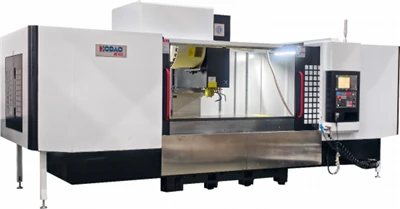
If you’re in the market for a new VMC or looking to upgrade your existing machine’s chip handling system, feel free to reach out to our team to discuss what works best for your shop’s needs. We can walk you through the different conveyor options, help you size it for your operations, and make sure you don’t end up with a setup that causes more problems than it solves.
CNC Lathe References:
- Machinery’s Handbook. "Metalworking Fluids and Chip Handling Systems." 31st ed., Industrial Press, 2020.
- SMMA (Society of Manufacturing Engineers). "VMC Operational Best Practices for Chip Management." SME Press, 2021.
- Modern Machine Shop. "Common Causes of VMC Downtime and How to Avoid Them." Gardner Business Media, 2022.
Taizhou Qiyang Trading Co., Ltd.
As one of the most professional vertical machining center manufacturers and suppliers in China, we’re featured by quality products and good price. Please rest assured to buy bulk vertical machining center for sale here and get quotation from our factory. Customized orders are welcome.
Address: Zhenhai Village, Binhai Town, Wenling City, Taizhou City, Zhejiang Province
E-mail: qycncmachine@outlook.com
WebSite: https://www.qycncmachine.com/
