If you’ve ever found yourself mid-gybe on a calm afternoon, leaning too far over the cockpit to reach your tiller, or struggling to steer a loaded dinghy through a narrow channel because your tiller is too short or too loose, you know how frustrating a poorly adjusted folding tiller extension can be. As someone who’s spent the last decade supplying folding tiller extensions to sailors of every level—from weekend catamaran crew to competitive dinghy racers—I’ve seen first-hand how many sailors skip this simple, critical step. They either crank it down so tight they risk stripping the hinge or so loose it rattles around mid-tack, turning a routine sail into a small headache. Today, I’m walking you through the science and the practical, step-by-step process to adjust a folding tiller extension correctly, so it’s safe, smooth, and built to last. Tiller Extension
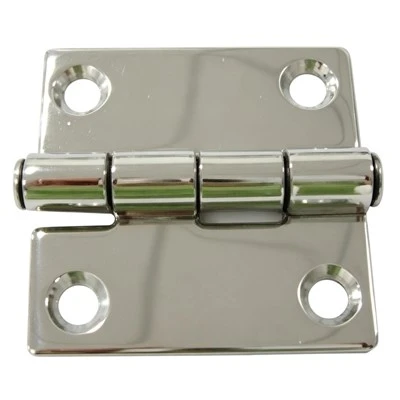
First, let’s talk about why a folding tiller extension is not a one-size-fits-all accessory, and why getting its adjustment right matters more than you might think. A folding tiller extension’s core job is to extend your steering range while keeping your hands clear of lines, shrouds, and the boom when you’re trimming sails or moving around the cockpit. Folding models, unlike fixed ones, add the extra layer of a hinge joint that lets you stow them flat against the tiller when not in use, which is perfect for small cockpits or when you need to move forward to trim headsails. But that hinge is also the weak point if it’s adjusted wrong: too much play, and it will wobble, causing inconsistent steering that can throw off your course or even make you miss a critical tack; too much tension, and you’ll struggle to fold it up when you need to, or risk cracking the hinge’s plastic components over time.
I get it—most sailors pick up a tiller extension, bolt it on tight, and call it good. But there’s a difference between “installing” it and “adjusting” it to work with your specific boat and sailing style. Let’s break this down into four key parts: adjusting the length, fine-tuning the hinge tension, aligning the hinge for smooth movement, and checking for safety. We’ll start with the basics, because even small mistakes in length adjustment make all the other steps irrelevant.
First step: Measure and set the correct length for your tiller extension. This is the part I see sailors mess up most often. How do you know what length is right? The goal is to have the extension long enough so you can steer comfortably without stretching, but short enough that it doesn’t interfere with any other controls on your tiller. Here’s the practical test I teach every customer who buys from us: stand in your normal steering position (for most dinghies, that’s sitting just behind the tiller, hands relaxed at your sides on the extension; for keelboats, it’s often standing or sitting slightly off-center). Hold the tiller in the middle of its travel, so it’s pointing straight ahead. Your hands should be at a natural, 90-degree bend at the wrist—no reaching forward, no hunching over, no twisting your arm to turn the wheel (wait, no, tiller). If your wrist is bent more than that, the extension is too short; if your arms are fully extended, shoulder’s back, no that’s too long.
Also, account for folding. If you regularly stow your extension when moving around the cockpit or when docking, add a half-inch to that length. You don’t want the hinge hitting the tiller’s grip or a line block when you fold it up. For example, a Laser’s tiller is only 18 inches long, so a 22-inch extension works perfectly, and leaves enough space between the hinge and the tiller’s end to fold flat without catching. For a 24-foot keelboat, you might go with a 30-inch extension, depending on how much clearance you have between the tiller and the cockpit coaming. One pro tip: don’t use a flexible tiller extension. We’ve tested all sorts, and aluminum or composite rigid extensions hold their shape far better when you’re steering through rough water—flexible ones twist mid-tack, and that inconsistent steering is a nightmare.
Next, adjusting the hinge tension. This is the make-or-break step for folding tiller extensions. The hinge is usually secured with a bolt, a nylon lock nut, or a plastic friction adjuster, depending on the model. Too loose, and the extension flops around; too tight, and you can’t fold it easily, or you risk damaging the hinge’s pins or brackets. How do you find the sweet spot? Start by hand-tightening the adjustment bolt (or nut) until you can no longer move the hinge with just one finger. Then, loosen it about a quarter turn. Now, test it: you should be able to fold the extension up and down with light pressure—just enough to move it with one hand, no extra force needed—but it shouldn’t move on its own when you’re steering, even in choppy water.
I’ve seen too many sailors over-tighten this bolt, thinking it will stop play. What happens is that the pressure wears down the nylon insert in the lock nut, or scuffs the inside of the hinge, leading to more play over time, not less. We design our folding tiller extensions with a stainless steel pin and a nylon bearing in the hinge for just this reason—they distribute pressure evenly, so you don’t have to crank down on the bolt. If your adjustment is right, you’ll get consistent steering: when you turn the tiller, the extension moves with it, no slip, no play, no extra wobble. Another test: take your boat out in light chop, steer a straight course for five minutes, and check if the extension has moved out of alignment. If it has, you might need a tiny bit more tension—an eighth of a turn at a time. But if it’s binding or hard to fold, loosen it a little.
Third step: Aligning the hinge and the extension with the tiller. Even if the tension is perfect, if the extension isn’t aligned straight with the tiller, you’ll get inconsistent steering. This is especially common on older boats where the tiller has a slight curve, or if you’ve installed a new tiller that’s not perfectly straight. How to align it: loosen the mounting bolts that hold the extension to the tiller (not the hinge bolt), so the extension can move freely. Hold the tiller in the straight-ahead position, then adjust the extension so it’s perfectly in line with the tiller. Look down the length of both—they should form a straight line, no angling up or down left or right. Tighten the mounting bolts evenly, not just one side at a time, to avoid pulling the extension off alignment. For example, if you have a tiller with a curved end, you might need to shim the mounting bracket slightly on one side to get a straight line—we supply small plastic shims as an optional accessory for exactly this scenario.
Wait, what about when you’re sailing on a run, and the boom is on the other side, so you’re steering from the weather side? The extension should still align straight with the tiller, even when the tiller is turned all the way. If the hinge binds when you turn the tiller to full port or full starboard, that’s a sign of misalignment. Loosen the mounting bolts a little, wiggle the extension until it moves freely through its full range, then retighten. That’s a critical step I almost missed—most people only align it in the straight-ahead position, but you have to test the full travel of the tiller to make sure the hinge doesn’t catch.
Now, safety checks, because sailing equipment is no joke. After you adjust everything, there are three quick checks to make sure you didn’t miss anything. First, wiggle the extension hard from side to side—no movement, right? If there’s play at the mounting point, not just the hinge, your tiller clamp is loose. Tighten the clamp bolts, and if that doesn’t fix it, add a locking compound (like Loctite 242, the medium strength one—don’t use high strength, you’ll never take it apart later). Second, test the hinge when it’s folded up. If it’s flapping against the tiller or the cockpit coaming, you might need to adjust the tension slightly, or add a small rubber bumper to stop it from rattling. Third, in rough conditions, hold the extension mid-steering, and see if there’s any twist. If the extension twists when you apply pressure, that means it’s a weak material—if you bought a cheap plastic one, that’s probably the issue. We only use aircraft-grade aluminum and UV-stabilized composite for our extensions, because they don’t twist, even in 20-knot winds.
I’ve had customers reach out to me over the years saying their folding tiller extension broke mid-race, or fell off when they were docking, and nine times out of ten, it’s not a defect in the product—it’s a bad adjustment. Last summer, a Laser sailor from Florida emailed me saying his extension’s hinge snapped during a practice race, and when I asked him how tight the bolt was, he said he cranked it down as hard as he could with a wrench. That’s exactly the mistake I was talking about—over-tightening stripped the nylon bearing, and then the pin snapped when he hit a wake. The fix? Following those simple tension steps, and he’s now one of our repeat customers.
Another common mistake: not adjusting the extension for your sailing position. If you often sail with a hiking strap, or if you move around the cockpit a lot, you might need a slightly shorter extension than a sailor who sits in one spot the whole time. We design our folding tiller extensions with adjustable length options, too—some have a telescoping bar that lets you tweak the length by a few inches on the water, which is perfect for when conditions change. For example, if you’re going upwind in heavy air, a slightly shorter extension gives you more control; if you’re sailing downwind with the crew hiking out, a longer extension keeps your hands clear of the boom.
At the end of the day, adjusting a folding tiller extension is about balance: between tension and flexibility, length and clearance, alignment and function. It’s not a hard process, but it’s one that a lot of sailors overlook, and it makes a huge difference in the safety and enjoyment of your time on the water. If you’re in the market for a folding tiller extension, or if you want to replace an old one that’s worn out from bad adjustments, we supply high-quality, durable extensions that are built to hold their adjustment for years, no matter how many tacks and gybes you do. To learn more about our products, or to talk through what size and style works best for your boat, feel free to reach out—we’re always happy to help a fellow sailor get on the water with reliable steering equipment.
Deck Hinges References
- Sailing Illustrated, “Essential Steering Equipment for Small Craft,” 2021
- American Sailboat Association, “Maintenance Guide for Sailing Deck Hardware,” 2022
- International Sailing Federation, “Equipment Safety Standards for Recreational Sailors,” 2020
Pan-U Ind. Co., Ltd.
Pan-U Ind. Co., Ltd. is one of the most professional tiller extension manufacturers and suppliers in Taiwan, also supports customized service. Please feel free to buy bulk ISO certified tiller extension made in Taiwan here from our factory. For quotation, contact us now.
Address: 7th Floor, No.270, Section 1, Fuxing Road, South District, Taichung City, Taiwan
E-mail: jessicahan@panutw.com
WebSite: https://www.panumarine.com/
