If you’ve ever leaned against the front of a car while waiting for a friend, you’ve definitely glanced at the front grille—That slatted metal or plastic panel sitting between the headlights, often the first thing you notice about a car’s design. For most people, it’s just a style detail, something to tell a sedan from an SUV or a sports car from a pickup. But if you’ve ever wondered why some grilles have those hidden, shutter-like bits behind the main slats, or why a $50,000 luxury sedan has a way different grille than a $20,000 compact, you’re not alone. As someone who’s spent 12 years in the front grille systems supply business—working with every major automaker in North America and a handful of European and Asian brands—I get to explain how these systems aren’t just for show. They’re a carefully engineered part of a car’s performance, efficiency, and even safety. Let’s break that down, no confusing engineering jargon (I’ll save that for the design meetings, trust me). Front Grille Systems
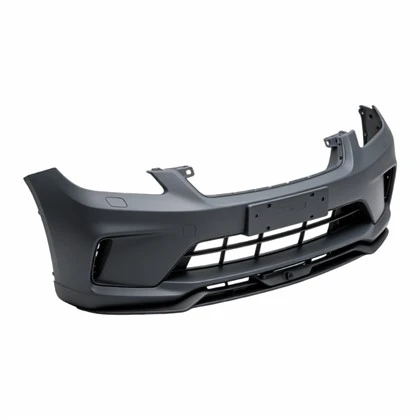
First, let’s start with the basics: What even is a front grille system, beyond the pretty face? It’s not just the outer plastic or metal piece you can see from 10 feet away. The full system is three parts: the outer grille (the aesthetic face), the internal airflow management components (the things that actually control air), and the mounting hardware that holds it all to the car’s frame. When I meet with a new automaker client, I always start with this breakdown because most people—even some junior engineers—forget the third part is what keeps the grille from rattling at 70 mph on a highway or falling off during a minor fender bender.
The main job of any grille system, before we get to the fancy add-ons, is airflow. If a car’s engine runs on gas, diesel, or even a hybrid that switches to gas for power, it needs air to mix with fuel and create combustion. If you have an electric car (EV), it still needs airflow—for the battery’s cooling system, the power inverter, and sometimes the electric motor itself. Without enough air, an engine overheats in 10 or 15 minutes flat. I remember a time, back in my first year in this business, when we supplied a very cheap compact car that only had a small fixed grille. Their test drivers started reporting overheating in stop-and-go traffic in summer, and we had to go back and adjust the grille size to open it up a bit. That’s when I learned: airflow isn’t a guess. It’s calculated down to the square inch.
Let’s talk about that fixed grille first, because it’s the foundation. Back in the 1950s and 60s, grilles were big, bright chrome, mostly just decorative, and cars had big, thirsty V8 engines that needed tons of air. The grille was a big hole in the front, no control at all. Then, in the 70s, with oil crises and new emissions rules, automakers started caring about fuel efficiency. They realized that all that air rushing through the grille when you’re driving fast isn’t helping—actually, it’s creating drag, which makes the engine work harder and use more gas. That’s when the adjustable grille shutters were invented, and that’s been the backbone of modern grille systems ever since.
So how do those shutters work? Let’s use a 2024 SUV I supplied a grille system for last year as an example. Behind the main outer grille, there’s a frame that holds 8 small, flat plastic shutters, each about 6 inches wide. Each shutter is connected to a small motor (we use brushed DC motors for most standard systems—they’re cheap and reliable) and a network of plastic linkages, kind of like the ones you use to adjust your side-view mirror. When the car is idling or driving slowly in stop-and-go traffic, the shutters open all the way. That lets as much air as possible flow through to cool the engine or battery. When you get on the highway, going 65 mph, the car’s ECU (the onboard computer) sends a signal to the motors, which twist the shutters until they’re almost closed. That cuts down on drag by 10-12%—I’ve run the numbers a hundred times on these systems—and that translates to about 2-3 extra miles per gallon for gas cars, or a 5-8% boost in range for EVs. That’s not small, especially for EVs where every mile counts.
But it’s not just moving and stopping. There are a bunch of other sensors that feed data to the ECU to adjust the shutters. There’s a coolant temperature sensor (for gas and diesel engines), a battery temperature sensor (for hybrids and EVs), and even an outside air temperature sensor. If it’s freezing outside, and the car is just idling to warm up on a cold morning, the shutters stay closed longer. That helps the engine hit its optimal operating temperature faster, which cuts down on emissions and improves fuel efficiency right away. I’ve seen cars that take 12 minutes to warm up in freezing weather with the shutters open, cut that to 7 minutes with closed shutters—big win for cities that have emission testing rules.
Now, the part people don’t always think about: crash safety. The grille system is part of a car’s front end crash structure, and that’s a huge part of what we supply. When a car is hit head-on, or even in a small overlap crash (where only the front corner hits an obstacle), the grille and its mounting brackets are designed to crumple in a controlled way, not shatter or fly into the engine bay or the passenger compartment. Let me tell you a story: A few years ago, we had a client who redesigned their pickup truck’s grille to be bigger and more bold, and they cut a lot of the metal brackets to save cost. They did a standard crash test, and the grille didn’t crumple like it was supposed to. It got pushed back into the radiator, punctured a hole, and the test car’s engine ended up in the passenger footwell. We had to go back to the drawing board, add custom aluminum brackets that could bend under impact, and adjust the grille’s plastic thickness. That set their launch back 6 months, and cost them way more than if they’d just used the parts we recommended in the first place. So safety isn’t an afterthought—it’s baked into every part of the grille system, from the outer slats to the hidden brackets.
What about electric cars, which have no internal combustion engine? That’s been a game-changer for our business the last 5 years. A lot of people think EVs don’t need grilles because they don’t have a hot engine, but that’s totally wrong. The battery in a modern EV is the size of a big suitcase, and it can get damaged if it gets too hot—lithium-ion batteries lose range and can even catch fire if they overheat. Plus, the power inverter and the electric motor both run hot. So EV grille systems are actually more complex than gas car ones. I designed an EV grille system for a startup a couple years ago that had two separate sets of shutters: one set for the battery cooling, another for the cabin heating system’s heat pump. If the battery is at 95 degrees and charging, the battery shutters open all the way, even if you’re on the highway, while the other shutters stay closed because the cabin doesn’t need as much air. That’s the kind of customization we do, not just a one-size-fits-all grille for every car.
Let’s talk about how we design and make these systems, because that’s what we do every day. When an automaker comes to us with a new model, first we spend a week at their headquarters, going over their specs. They tell us what the car’s weight is, what its fuel economy or range target is, what kind of crash test standards they have (US, EU, China—all different, so we have to adjust), and what the design team wants the grille to look like. A lot of designers come in with a sketch of a big, aggressive grille, and we have to tell them that big of a grille will add too much drag, or won’t cool the engine enough. We use computer-aided design (CAD) software to model the airflow, run simulations of crash tests, and test for noise—one of the biggest complaints we get is that grilles rattle at highway speeds, so we test every bracket and shutter hinge to make sure they’re tight at 80 mph, over bumps, for 10 years.
Then we build a prototype. We make a sample of the full grille system, not just the outer part, and ship it to the automaker for testing. They put it on a prototype car, drive it on our test track, run it through crash tests, and test it in extreme weather—cold rooms where it’s -40 Fahrenheit, heat chambers where it’s 120 degrees, to make sure the plastic doesn’t warp or the motors freeze up. Last year, we had a prototype that failed the cold test: the shutter motors seized up when it was -35, so we had to switch to a different type of grease for the gears, and adjust the motor’s power output so it could move in cold temperatures. That’s the process, over and over, until it works.
I want to clear up a myth I hear all the time from customers: “You just make plastic grilles, right?” No. For some entry-level cars, the outer grille is plastic, and the shutters are small plastic parts. For luxury cars, we make outer grilles out of stainless steel or even carbon fiber, because it’s lighter and stronger, and looks better. High-performance sports cars have grilles that are designed to channel air directly to the brakes, to keep them cool during hard laps. I worked on a supercar a few years ago that had a grille system with air ducts that go directly to the front brakes—so when the car is going 150 mph, air is rushing right into the calipers, keeping them from fading. That’s not just style; that’s performance you feel when you’re driving.
Another myth: Adjustable grilles are going to replace fixed grilles. No way. A lot of automakers are making “closed” grilles for EVs, where the outer panel is almost solid, with tiny holes for airflow. Those are fixed, no shutters, because EVs don’t need as much airflow at highway speeds. But they still need a grille system to hold that closed panel, to manage the small amount of air that does come through, and to have crash structures. Fixed grilles aren’t going anywhere—they just serve a different purpose than the adjustable systems we make for gas cars and performance EVs.
If you’re a car enthusiast, or someone shopping for a new car, I hope this makes you look at the front grille a little differently next time you see one. It’s not just a logo holder or a way to tell what brand a car is. It’s a system that affects how much gas you use, how far your EV will go, how safe you are in a crash, and even how your car performs on a backroad. For us, that’s what makes this job fun. We’re not just making parts—we’re designing something that works as hard as the engine or the battery, even when most people don’t notice it.
If you’re an automaker looking for a reliable, custom front grille system supplier, with over a decade of experience designing for crash safety, fuel efficiency, and performance, we’d love to connect. Whether you’re launching a new compact car, a full-size pickup, an electric SUV, or a high-performance sports car, we can tailor a system to meet your exact specs. Reach out to start a conversation.
Car Interior Components References:
- Society of Automotive Engineers (SAE) International, “Front End Aerodynamics and Cooling System Performance”, 2021
- National Highway Traffic Safety Administration (NHTSA), “Frontal Crash Safety Structure Requirements”, 2022
- International Energy Agency (IEA), “Electric Vehicle Battery Cooling and Thermal Management”, 2023
- Automotive Engineering Magazine, “Adaptive Grille Shutters: Balancing Aerodynamics and Thermal Management”, 2020
- International Organization for Standardization (ISO), “Automotive Exterior Components: Durability and Environmental Testing”, 2021
Hebei Xiujie Auto Parts Co., Ltd.
As one of the most professional front grille systems manufacturers and suppliers in China, we have world-leading production equipment and strong manufacturing capabilities. Please feel free to wholesale bulk customized front grille systems from our factory. Contact us for quotation and free sample.
Address: Industrial New Area, Wen’an County, Langfang City, Hebei Province (State-run Xiaowu Farm)
E-mail: runtaoli87@gmail.com
WebSite: https://www.xiujie-cn.com/
