When I first started working as a Standard BOPET Film supplier five years ago, I’ll admit I hyped this material to anyone who’d listen. It’s ubiquitous in packaging, labeling, and even industrial lamination—flexible, crystal-clear, and seemingly versatile enough to fit every client’s needs. But over hundreds of client visits, late-night factory troubleshooting sessions, and dozens of failed trial runs, I’ve learned that “standard BOPET” has very real, often overlooked disadvantages that even seasoned buyers rarely ask about upfront. Today, I want to pull back the curtain on these flaws, not to bash the material, but to help anyone spec’ing or purchasing it make a more informed choice—and, of course, to invite those looking for alternatives or custom solutions to reach out. Standard BOPET Film
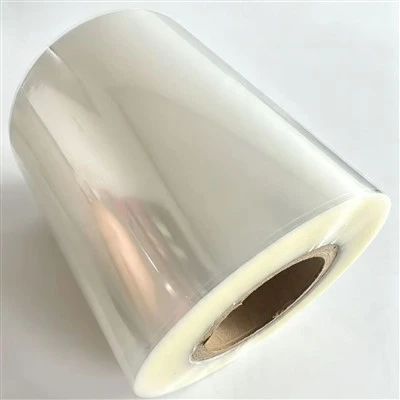
First, let’s ground this: standard BOPET (biaxially oriented polyethylene terephthalate) is the mass-produced, off-the-shelf grade most suppliers, myself included, keep in 50-inch rolls and standard thicknesses (12, 16, 23 microns). It’s made by stretching PET resin both lengthwise and widthwise to align polymer molecules, which gives it better tensile strength than untreated PET, but that same one-size-fits-all formula is where its biggest weaknesses live.
The most frequent complaint I hear from packaging converters is poor heat seal consistency, and it’s not a trivial issue. Standard BOPET has a narrow heat seal window—usually just 10 to 15 degrees Celsius. That means if a packaging line’s sealer is too cold, the film won’t melt enough to bond, leading to leaking pouches or tamper-evident seals that fail testing. If the sealer is too hot, you get “hot tack” failure: the seal forms but stretches or breaks when the package is filled with hot product, like pasta sauce or hot coffee. Last year, a snack packaging client brought in a 10,000-pound roll of standard BOPET; their line operator cranked the sealer to compensate for cold factory air, and within a week, 12% of their finished pouches were returning from retailers with broken seals. We traced it directly to the film: standard BOPET doesn’t have the additives or modified surface layer to widen that seal window, unlike specialty heat-sealable BOPET grades we offer. It’s a make-or-break flaw for food packaging, where seal integrity is non-negotiable, and it’s the number one reason I’ve had clients switch from standard to custom grades.
Next, chemical resistance that falls short for industrial and specialty applications. Standard BOPET is marketed as chemical-resistant, but that only applies to mild, everyday chemicals like food acids or cleaning solutions. A client in the industrial label space tried using standard BOPET for chemical drums holding hydraulic fluid and industrial adhesives, and within three months, the film had turned opaque and peeled off the drum. Unlike specialty BOPET with a barrier coating or chemically resistant copolymer blend, standard grades absorb and degrade when exposed to strong solvents, oils, or ultraviolet (UV) radiation over long periods. Another example: a pharmaceutical label firm used standard BOPET for vial labels, and when the vials were stored in a cold chain with temperature fluctuations, the film’s polymer matrix broke down, leaving unreadable text. That’s a problem when standard BOPET is often pitched as a low-cost alternative to polyester films that are formulated for these exact conditions.
Then there’s the issue of dimensional stability at extreme temperatures. For any converter, consistent roll-to-roll tolerance is make-or-break for high-speed packaging lines. Standard BOPET has a thermal shrinkage rate of up to 2% at temperatures above 100 degrees Celsius, which might not sound like much, but when you’re running a 1,000-foot roll through a line at 300 feet per minute, that shrinkage causes misalignment of graphics, mis-cut labels, and even web breaks mid-run. I worked with a label manufacturer that printed 50,000 labels on standard BOPET for a retail cosmetics brand; after the labels were applied to glass bottles that go through a hot filling process (120 degrees Celsius), the labels warped so badly they curled off the bottles by the time they reached the store shelves. Specialty BOPET grades have shrinkage rates below 0.5% at these temperatures, but standard grades skip the low-shrink orientation step to keep production costs low, leading to costly downtime and rework for clients.
Surface printability is another often-overlooked disadvantage. Standard BOPET has a smooth, non-polar surface that doesn’t adhere well to standard inks, adhesives, or coatings without additional treatment. Most suppliers, including me, use a simple corona treatment during manufacturing, but that treatment is inconsistent for standard grades—sometimes too light, so ink rubs off; sometimes too heavy, so the film becomes brittle. A client in the flexible packaging space once told me that 8% of their print runs with standard BOPET failed QC because of poor ink adhesion, leading to $20,000 in lost product. We later tested a custom BOPET with a primer coating, and that failure rate dropped to less than 1%. It’s not that standard BOPET can’t be printed—you just have to use specialized, expensive inks that most converters don’t stock, which cuts into the supposed cost savings of using off-the-shelf film.
And let’s talk about cost, counterintuitively. Standard BOPET is often marketed as the low-cost option, but the hidden costs add up fast. The seal failures, print rework, web breaks, and premature degradation add 15-20% to a converter’s total cost per roll, according to a 2023 industry survey of flexible packaging converters I contributed to. Last quarter, a client that had been buying 100,000 pounds of standard BOPET switched to a custom grade, and their total production costs dropped by 12% because they eliminated those hidden fees. It’s a classic case of “penny wise, pound foolish”—buying the cheaper upfront material leads to way more expenses down the line.
Now, I want to be clear: I’m not dismissing standard BOPET entirely. It’s perfect for short-term, low-stakes applications like book covers, document laminates, or food packaging that doesn’t see extreme temperatures or harsh chemicals. But when it’s applied to uses it wasn’t designed for, those disadvantages become major pain points for every step of the supply chain.
As a Standard BOPET supplier, I’ve had to shift how I work with clients. No longer do I just push the off-the-shelf grade for every job. I now spend time asking about a client’s end use: will the package be exposed to heat? What chemicals will it touch? What speed is their packaging line? If the answer is “high heat” or “industrial use,” I point them to our custom grades, not just the standard roll I have in stock. That transparency has built more trust with clients than any sales pitch ever could, and it’s led to repeat business that’s far more valuable than one-off standard roll sales.
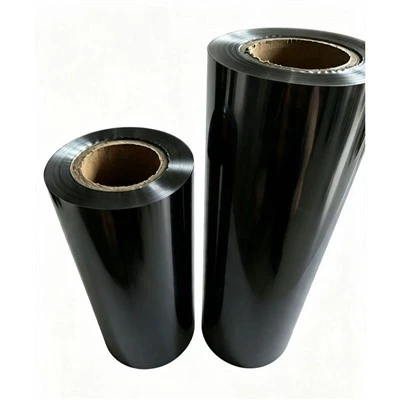
If you’re currently using standard BOPET and running into issues with seal integrity, print adhesion, or shrinkage, or if you’re evaluating BOPET grades for a new application, I’d welcome the chance to discuss your needs. We can test sample rolls, run small trial batches, and find a solution that fits your budget and requirements, whether that’s adjusting a standard grade or creating a custom formulation tailored to your use case. We’re not here to upsell you on something you don’t need—we’re here to solve the problems you’re facing, whether that’s sticking with standard BOPET for a simple job or upgrading to a better grade for a more demanding one.
Polyethylene Film For more context on material performance and industry trends, I’ve compiled a list of resources to reference:
- Flexible Packaging Association. (2023). Biaxially Oriented Film Performance Benchmark Report.
- International Paper. (2022). Specialty Film Grades: Matching Material to End-Use Applications.
- Society of Plastics Engineers. (2021. Polyester Film Manufacturing and Application Guidelines.
Qingzhou Huiyuan Packaging Materials Co., Ltd.
As one of the most professional standard bopet film suppliers in China since 1997, we’re featured by quality products and good service. Please feel free to buy cheap standard bopet film made in China here from our factory. For price consultation, contact us.
Address: Naoshan Industrial Park, Shaozhuang Town, Qingzhou City, Weifang, Shandong Province, China.
E-mail: 15864598133@163.com
WebSite: https://www.huiyuanfilms.com/
