Hey everyone, let’s cut to the chase—if you’ve ever bought a face mask that keeps its shape after a wash, a wipe that actually cuts through grease without leaving streaks, or a bandage that doesn’t stick to a scrape, you’ve probably interacted with functional non-woven fabric and didn’t even know it. I’m Sarah, and I’ve been a functional non-woven fabric supplier for 12 years, working with factories, medical teams, and even small retail brands to make materials that do way more than just “hold stuff together.” A lot of folks reach out to me all the time asking, “Wait, what even is functional non-woven? And how’s it different from that cheap flimsy stuff I used for a DIY craft last month?” Let’s break this down without jargon—no stuffy textbook terms, just real talk from someone who’s touched thousands of rolls over the years. Functional Non-woven Fabric
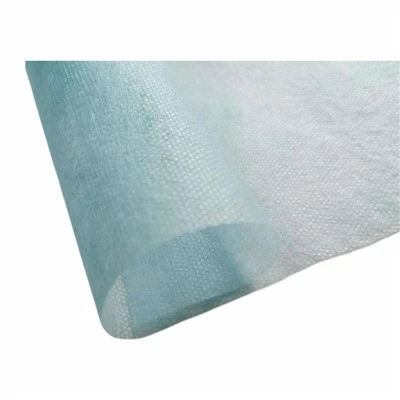
First, let’s start with the basics of non-woven fabric in general, ’cause you can’t talk “functional” until you know the baseline. If you’ve ever sewn (or avoided sewing) a woven shirt, you know woven fabric is made by crisscrossing threads over and under each other—like a basket, right? Non-woven? It skips that entire weaving or knitting step. Instead, it’s made by bonding fibers together mechanically (think: tiny needles punching into the web to lock fibers tight), thermally (heat melts a little plastic binder to stick fibers), or chemically (a mild adhesive spray that sets on the material). That’s the big, simple difference: no interlacing threads. It’s faster to make, cheaper for mass production, and way more flexible to tweak than woven fabric.
Now, functional non-woven fabric is where the magic happens. Regular non-woven (like the thin 1-ply face mask layers you might’ve found at a dollar store, or the cheap grocery store produce bags) only does one thing—usually “be light” or “be disposable.” Functional? We modify those basic fiber bonds during production to add specific, useful properties you can’t get from generic non-woven. Think of it like tuning a guitar: you’ve got the same basic strings, but you adjust the tension to get low bass or high treble. For functional non-woven, we adjust the fibers, bonding process, or even add tiny additives to make it do exactly what a customer needs.
Let’s run through the most common functional properties our clients ask for, so you can picture how it works. First up: water resistance, but not the flimsy “paper grocery bag tears when it rains” kind. We’ve got a polypropylene-based functional non-woven that we make for outdoor work gloves—its fibers are bonded with a tiny amount of polyurethane that repels water, but it’s still breathable, so your hands don’t get sweaty after an hour of raking. A few years back, a client from a medical supply company came to us complaining that their standard surgical gowns were letting blood seep through during procedures, which posed a contamination risk. We adjusted the thermal bonding process to make the fiber web tighter, added a nano-sized coating that repels liquid but lets air pass, and boom—they had a gown that cut fluid penetration by 90% without feeling like a plastic bag. That’s functional non-woven in action.
Another big one: absorbency. You know those heavy-duty cleaning wipes for countertops that actually soak up soda or coffee without leaving a mess? That’s our super absorbent functional non-woven. Unlike cotton towels, which get soggy and leave lint, this stuff is made with cellulose and polypropylene fibers mixed, then bonded to create tiny tiny holes that trap liquid. We work with a janitorial brand that uses this for industrial cleaning wipes—one roll cleans a full garage floor of oil spills, and it doesn’t fall apart mid-use. It’s way more durable than generic absorbent non-woven, which would tear if you tried to scrub a stubborn stain.
Then there’s antimicrobial stuff, which blew up during the pandemic but is still super popular now. A lot of people think we just spray some sanitizer on the fabric, but that’s not functional—it’s temporary, and it wears off after a few washes. Real functional antimicrobial non-woven has silver ions (tiny, safe amounts, way less than what’s in your water bottle) embedded into the fibers during bonding. That means the antimicrobial property lasts for the entire life of the product—say, a reusable face mask layer, or a baby’s bib that stays odor-free even after multiple washes. We had a mom-and-pop baby product brand reach out last year, worried that their regular bibs smelled like milk after a day of use. We sent them a sample of our antimicrobial non-woven, and they told us 6 months later that sales went up 30% ’cause parents were obsessed with bibs that didn’t get stinky.
Wait, and let’s not forget filtration—this is the stuff in N95 masks, right? The thin blue layer between the two white ones? That’s functional non-woven made with electrostatically charged fibers. We don’t just charge it randomly—we adjust the fiber size so the charge stays, even when it’s exposed to humidity. That lets it trap tiny particles (like dust, bacteria, or pollen) without making it so thick it’s hard to breathe through. A lot of people think filters are just woven mesh, but no—non-woven is way better for this, ’cause the random fiber arrangement creates more tiny gaps to catch particles, and we can tweak the charge to make it more efficient. We supply this filtration fabric to a few small mask brands that focus on eco-friendly, reusable masks—their customers love that it’s not the same thin disposable stuff that falls apart after a week.
Now, let’s get real about what functional non-woven isn’t, ’cause there’s a lot of misinformation out there. It’s not “magic fabric”—it’s engineered. You can’t take a roll of cheap non-woven and add antimicrobial properties later; you have to build it into the production process. It’s also not all the same—one roll might be for medical gowns, another for baby wipes, another for agricultural crop covers. Last year, a local farmer reached out to me asking if we had a functional non-woven that could protect his tomato plants from frost without blocking sunlight. We worked with him to make a lightweight polypropylene fabric that’s breathable (so plants don’t sweat and get mold), water-resistant, and UV-protective—he used it for 2 months last spring and said his tomato yield was 25% higher than the year before. That’s the cool part: functional non-woven isn’t just for big corporations, it works for all kinds of small businesses and people with specific needs.
I also get asked all the time: is functional non-woven eco-friendly? That’s a tricky one, ’cause it depends on what it’s made of and how it’s disposed of. Some functional non-woven is made from recycled plastic bottles—we have a line that uses 100% post-consumer recycled polypropylene, so it’s diverting plastic from landfills. But a lot of it is still non-recyclable, especially if it has coatings or embedded additives. That’s why we’re constantly tweaking our processes: last year, we launched a compostable line of functional non-woven, made from plant-based fibers (corn, bamboo) with natural additives, so it breaks down in a home compost bin in 180 days. We work with a few sustainable cleaning brands that switched from plastic-based wipes to this, and they say their customers love that it doesn’t end up in the ocean. It’s a work in progress, but that’s the point of being a functional supplier—we’re always adapting to what people need.
Let’s circle back to why this matters beyond just “it works better.” A lot of industries rely on functional non-woven without even realizing it. The medical field? Surgical drapes, bandages, wound dressings—all use it. The automotive industry? Car floor mats, interior trim, air filters—yep, functional non-woven. Agriculture? Crop covers, potting liners, weed barriers. Even the fashion industry—some eco-friendly clothing brands use functional non-woven for shoe insoles or bag linings, ’cause it’s durable and can be made from recycled materials. For a small supplier like me, working with all these different industries is the best part—every day, we’re solving a different problem for someone.
If you’re reading this, chances are you’ve got a project where generic non-woven just won’t cut it. Maybe you’re a brand looking to upgrade your product, a small business needing a custom material, or even someone who’s tired of cheap products that fall apart. For 12 years, I’ve worked one-on-one with every client—no automated sales calls, no generic quotes. I’ll send sample rolls, walk you through the properties, and even tweak the fabric if you have a specific need. Whether you need a few yards for a prototype or a full container for a product launch, I’m here to help. If you’re ready to brainstorm how functional non-woven can work for you, reach out to chat through your project details.
PP Non-woven Fabric References
- Nonwovens Industry Association. “Functional Nonwovens: Applications and Innovation.” 2023.
- Textile Institute. “The Science of Nonwoven Fabric Manufacturing.” 2022.
- Sustainable Nonwovens Council. “Eco-Friendly Functional Nonwoven Solutions.” 2023.
- FDA. “Medical Nonwoven Fabric Standards for Surgical Products.” 2021.
Zhejiang Guowang Packaging Co., Ltd.
Zhejiang Guowang Packaging Co., Ltd. is one of the most professional functional non-woven fabric manufacturers and suppliers in China, featured by quality products and low price. Please rest assured to buy customized functional non-woven fabric made in China here from our factory. Also, pricelist is available.
Address: Youbu Town, Lanxi City, Zhejiang Province, China
E-mail: Nicole@guowangtape.com
WebSite: https://www.guowangtape.com/
