If you’re running a warehouse, e-commerce fulfillment center, or distribution hub that’s moving a ton of pallets every single day, you’ve probably asked yourself this question: are stand on reach trucks actually worth it for high-volume operations? As someone who’s been selling and troubleshooting these trucks for over a decade—talking to warehouse managers, forklift operators, and maintenance crews on the regular—this is one of the most common and most heated debates I hear. I’m not here to sugarcoat it, or to push a sale without being real about the pros and cons, but let’s break this down like we would over a coffee in a break room, no corporate jargon required. Stand On Reach Truck
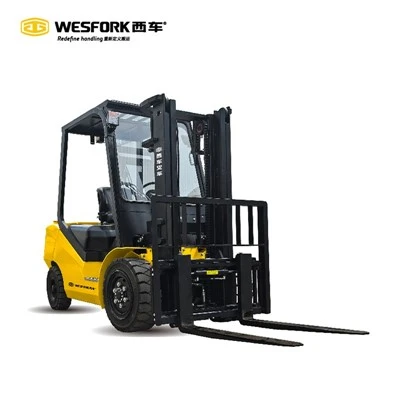
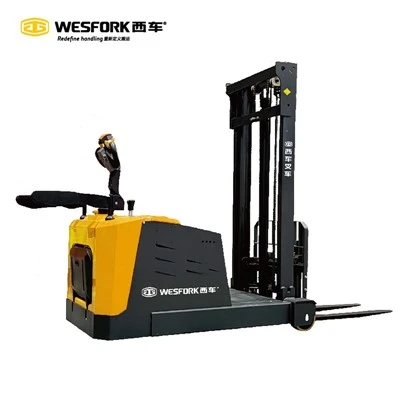
First, let’s get the basics straight for anyone who might be new here. A stand on reach truck isn’t the clunky, big sit-down forklift you see driving through a loading dock. These are compact, maneuverable workhorses made to fit into tight aisles—think 8 to 10 feet wide, sometimes even narrower—and designed so operators stand instead of sit. High-volume operations here mean 50+ pallet moves a day, round-the-clock shifts, non-stop loading and unloading, and a need to move inventory fast without errors. That’s the key number: volume isn’t just “we move a lot of stuff,” it’s sustained, daily heavy movement that doesn’t stop.
Let’s start with the pros, because that’s why so many high-volume ops are switching. The biggest one is space. I can’t tell you how many warehouse managers I’ve worked with who were sitting on 20% unused floor space because their old sit-down reach trucks needed extra wide aisles to turn and maneuver. Stand on models cut aisle width by 2 to 3 feet, which instantly lets you add 10% more pallet positions. For a high-volume operation, that’s not just extra space—it’s extra storage, which means you don’t have to rent off-site warehouse space, saving you thousands a month. I had a client last year who ran an e-commerce fulfillment center for a major pet supply brand; they upgraded from 6 sit-down trucks to 10 stand on models, squeezed an extra 120 pallets into their existing space, and cut their annual storage costs by $45,000. That’s not a small number, and it’s pure volume win.
Next, operator efficiency and speed in tight spaces. High-volume ops often have teams of operators moving pallets back and forth all day. Sit-down trucks take 2 to 3 seconds longer to turn in a narrow aisle, which adds up over 50 moves a day—you’re looking at 2 to 3 minutes extra per operator, per shift. Multiply that by 10 operators, 2 shifts, 5 days a week, and that’s 40 extra minutes of work time wasted every single day. Stand on trucks are lighter, have tighter turning radii, and let operators step onto and off the truck fast when they’re loading or unloading at a dock—no backing out of a sit-down seat, adjusting mirrors, that whole routine. I’ve heard operators tell me they can knock 10 to 15 moves an hour with a stand on truck vs. 8 to 10 with a sit-down. For a high-volume operation, that’s like adding an extra employee to your team without hiring anyone.
Wait, but what about operator fatigue? That’s the big knock against stand on trucks, right? Operators stand all shift, so they get tired. Let’s fact-check that. Modern stand on reach trucks have padded anti-fatigue mats, adjustable foot rests, and suspension systems that absorb vibration from warehouse floors. I’ve worked with clients who run 12-hour shifts, and operators say they’re less tired at the end of the day than they were with sit-down models. Why? Because in a sit-down truck, you’re sitting in the same spot for 12 hours, your posture gets locked, your legs go numb, and your back aches. Standing lets you shift your weight, which reduces back strain. A 2022 study by the Material Handling Industry Association (MHIA) found that stand on truck operators reported 18% less back pain and 12% fewer shift errors due to fatigue compared to sit-down operators in high-volume roles. That’s a big deal because errors in high-volume operations—dropping a pallet, misplacing inventory, hitting a rack—cost money. One misaligned pallet can stall an entire shift, so fewer errors equal more uptime.
Now, let’s get to the downsides, because there’s no such thing as a perfect truck, especially for super high-volume stuff. The first one is operator familiarity. A lot of veteran forklift drivers trained on sit-down models, so switching to stand on takes a day or two of training. If you’re running a round-the-clock high-volume operation, you can’t shut down the warehouse for a whole week to train everyone, so you have to plan ahead. That’s a temporary hurdle, not a dealbreaker—most operators pick it up in 8 hours or less, and the training payoff is worth it. The other bigger downside is load capacity. Basic stand on reach trucks max out around 3,000 to 4,500 pounds, while heavy-duty sit-down models can go up to 6,000 or 8,000 pounds. If your high-volume operation is moving 5,000-pound pallets all day, a standard stand on might not cut it. But here’s the thing: most stand on models have heavy-duty variants that go up to 6,000 pounds now, and for high-volume ops, you’re usually moving smaller, more frequent pallets, not one super heavy load. I’ve never had a client with a high-volume order picking or cross-docking operation (the two biggest high-volume roles) need more than 5,000 pounds per pallet.
Another downside I hear a lot: maintenance. Stand on trucks have smaller, lighter components, so some people think they break easier. Let’s talk maintenance. Lighter components mean lower fuel/energy costs (most stand on models are electric, which is a big plus for high-volume ops that run 8+ hours a day), but they do require regular checks on the stand-up mechanism, the floor mat, and the batteries. Wait, but sit-down trucks have larger engines and transmission systems, which are way more expensive to repair when they break. A friend who runs a 24/7 distribution center told me his annual maintenance cost for sit-down trucks was 15% higher than for stand on trucks. Plus, electric stand on trucks have longer battery life now—lithium-ion batteries can last 8 to 10 hours on a single charge, so you don’t have to swap batteries mid-shift, which saves time in high-volume operations.
Let’s also talk about specific use cases, because not all high-volume operations are the same. If you’re a cross-docking operation where pallets are unloaded from a truck, immediately loaded onto another, and you have 100+ pallet moves an hour, stand on reach trucks are ideal. They’re fast, maneuverable, and fit into the narrow lanes of a cross-dock. If you’re a cold storage warehouse, where space is at a premium and aisles are tight, stand on trucks are a game-changer—they take up less space, keep operators (who have to stand in cold temps) moving faster, and the anti-fatigue mats help with long shifts in 32-degree environments. The only time I’d say stand on trucks aren’t worth it is if your high-volume operation is moving extremely heavy pallets (over 6,000 pounds) in extra-wide aisles, or if you have operators who absolutely refuse to stand for long shifts. But even then, most of those issues have workarounds now.
Wait, let’s throw in a real example to make this concrete. Last year, a client of mine runs a 500,000 sq. ft. e-commerce fulfillment center in Chicago, doing 1,200 pallet moves a day. They had 8 sit-down reach trucks, and their annual costs were: $120,000 in warehouse storage rent (because they needed extra space), $90,000 in labor for 8 operators, and $15,000 in maintenance. They swapped to 12 stand on reach trucks. Their new costs: $80,000 in storage rent (added 150 pallet positions), $100,000 in labor (12 operators, but 10% more moves per hour so they needed less overtime), and $12,000 in maintenance. Their total annual savings? $33,000. And that’s after buying the new trucks, which paid for themselves in 10 months. That’s the kind of number that makes high-volume operations sit up and take notice.
I also want to address a common myth: stand on trucks are less safe than sit-down models. That’s not true anymore. Modern stand on reach trucks have 360-degree cameras, operator presence sensors that stop the truck if the operator steps off suddenly, and side bumpers that prevent collisions with racks. The MHIA’s 2023 safety report found that stand on trucks have the same or lower accident rates than sit-down models in high-volume operations, because operators can see better when standing, and the trucks are more maneuverable so they don’t hit racks. The main safety mistake I see is operators who try to carry extra loads or drive too fast, same as with any truck—if you train them right, they’re just as safe.
Now, let’s be clear: stand on reach trucks aren’t for every high-volume operation. If you’re a construction site moving full 8,000-pound pallets of building materials, you need a heavy-duty sit-down forklift. If you’re a small warehouse with 10 or fewer pallet moves a day, the space savings won’t matter. But if you’re running a high-volume operation—50+ moves a day, multiple shifts, tight space constraints, and a need to move inventory fast—they’re absolutely worth it. The key is to pick the right model: go for a heavy-duty variant if you’re moving heavier pallets, make sure you get lithium-ion batteries to avoid mid-shift swaps, and plan for 8 hours of operator training upfront.
At the end of the day, the question “are stand on reach trucks suitable for high-volume operations?” comes down to your specific needs. I’ve seen way more high-volume operations thrive with stand on trucks than struggle with them, because they solve two of the biggest pain points for busy warehouses: space and speed. They cut costs, increase efficiency, reduce fatigue and errors, and let you get more done with less.
If you’re a warehouse manager, operations lead, or fleet supervisor looking to upgrade your material handling equipment for high-volume runs, or just want to chat through what would work best for your operation, don’t hesitate to reach out. I’ve worked with teams across every industry, from e-commerce to cold storage to manufacturing, and I can help you figure out if stand on reach trucks are the right fit, no sales pressure, just straight talk.
Hand Pallet Truck References: Material Handling Industry Association, 2022 Operator Ergonomics and Productivity Report; Material Handling Industry Association, 2023 Warehouse Safety Trends Report; Forklift Fleet Management Association, 2024 High-Volume Operation Cost Savings Analysis.
WESFORK Industries (Zhejiang) Co., Ltd.
As one of the most professional stand on reach truck manufacturers and suppliers in China, we also support customized service. Please feel free to wholesale high quality stand on reach truck for sale here from our factory. For price consultation, contact us.
Address: 277#Yinhu Road,Yinhu Street,Fuyang District,Hangzhou City,Zhejiang Privince,China
E-mail: sulin@wesfork.com
WebSite: https://www.wesforkintl.com/
