If you’ve ever tried setting up a poultry net on a patch of ground that slopes, has low mounds, or dips here and there, you know it’s easy to end up with gaps, sagging netting, or worst of all—chickens or ducks squeezing through to wander where they shouldn’t. I’ve worked with poultry keepers (from backyard hobbyists to small-scale farmers) for years, and one of the most common questions I get isn’t “what size net should I buy?”—it’s “how do I install this net where the ground isn’t flat?” Uneven ground doesn’t have to mean a messy, ineffective fence. With a few practical, science-backed steps, you can set up a poultry net that stays secure, keeps your flock safe, and works with your land, not against it. Poultry Net

Let me start with a quick note: I’m not a professional land surveyor or a construction engineer, but over the past 12 years as a poultry net supplier, I’ve walked hundreds of property lines, fixed countless poorly installed nets, and tested every trick in the book for sloped, bumpy, or irregular ground. The key here is to work with the natural contours of your land, not force your net to follow a straight line that doesn’t exist. Rushing this step is where most people go wrong—they try to pull the net tight like they would on a flat yard, and within a week, wind or a curious chicken has shifted it, creating gaps.
First, before you even touch your net, you need to map your ground. Grab a notebook, a piece of string, and some stakes. Walk the entire perimeter of the area you want to fence, and mark every change in elevation, every low spot (like a small depression that fills with rain), every mound of grass or dirt, and even any rocks or tree roots that stick up. For gentle slopes (less than 10 degrees—about a 1.7 foot rise over 10 feet), this is straightforward, but if your land has steeper drops or uneven lumps, take note of where the ground dips more than 6 inches or rises more than that. This is where you’ll have to adjust your installation, not just drill stakes straight in like you would on flat ground.
Next, choose the right posts for your uneven landscape. A lot of suppliers will tell you generic metal or wooden posts work, but for uneven ground, I always recommend using T-posts with adjustable top clamps or wooden stakes that are 2 to 3 feet long, depending on the depth of your soil. Why? On a slope, if you drive a post straight down, the top will be at a different height than a post on level ground, which makes hanging the net crooked. For gentle slopes, you can angle your posts slightly uphill—about 15 degrees—so the top of the post stays consistent across the perimeter. For mounds or high spots, you’ll need to cut or trim your posts to match the elevation of the surrounding ground. For low spots, dig a tiny extra hole to set your post a few inches deeper, so the top lines up with the posts on higher ground. I’ve found that leaving posts at the same height, even when the ground is uneven, creates a much straighter, more stable net line than trying to follow the ground’s curve with the net itself.
Once your posts are in place, it’s time to handle the netting part—this is where most people make the biggest mistake. On flat ground, you pull the net tight so there’s no slack, but on uneven ground, slack is your friend… up to a point. For gentle slopes, you want to create a “staircase” effect with the netting. For every 2 to 3 feet of horizontal distance down a slope, let the net hang an extra 2 to 3 inches. This sounds counterintuitive, but it keeps the net from pulling tight at the bottom, which would create gaps in low spots. If you pull the net tight across a depression, the net will dip way down, and chickens can squeeze under the top edge or dig under the bottom. By adding small, controlled sections of slack, you let the net follow the ground’s natural curves without sagging so much that predators can get through. For steeper slopes (more than 10 degrees), you’ll need to use a technique called “stepped netting” where you run the net horizontally in short, flat sections across the slope, not at an angle. For example, if you have a slope that drops 2 feet over 10 feet, split that into four 2.5 foot horizontal segments, each with its own set of clips between posts. This keeps every segment taut, so wind or animals don’t shift it.
Wait, what about the bottom edge of the net? This is critical, especially on uneven ground. Chickens are stubborn diggers, and on sloped or bumpy ground, the bottom of a taut net can pull up, creating a gap along the edge. The solution here is twofold: first, use netting that has reinforced bottom tapes (that’s why all the poultry nets I supply have heavy-duty plastic or steel bottom tapes) that are stiff enough to stay in place even on uneven ground. Second, add “ground anchors” every 2 to 3 feet along the bottom edge, not just in the corners. For low spots where the net dips down, you can even bury a small section of the bottom edge under an inch or two of dirt to prevent digging. For mounds, you can pin the bottom edge to the mound with extra stakes so it doesn’t curve upward. I’ve had backyard farmers tell me this solves 90% of their predator problem on bumpy land, because there are no gaps along the bottom for foxes or raccoons to slip through.
Testing is the next step, and it’s non-negotiable. Once you’ve clipped the net to all the posts and secured the bottom edge, walk the entire perimeter of the fence and check for gaps. Start at the highest point and work your way down, bending low to look at the bottom edge. If you see a spot where the net is pulling away from the ground, add an extra stake or an anchor. If you see a sag in the middle of a section, add an extra post or a small clip to pull that area taut. Wait 24 hours and check again—sometimes netting shifts slightly as it adjusts to temperature and wind, especially if it’s a new roll. A lot of people skip this step because they’re excited to let their flock out, but taking 30 extra minutes to adjust small gaps now saves hours of fixing broken fences later.
I should also mention a few common pitfalls to avoid. First, don’t try to stretch the net tight at all costs. Even on gently sloping ground, a little slack is better than a strained net that pulls away from posts. Second, don’t use too many short posts. If you have a long, uneven stretch, place posts every 5 to 6 feet, not every 3 feet—too many posts create too many adjustment points and make the net harder to shape to the land. Third, if you have a steep drop (more than 15 degrees), don’t run the net along the drop itself. Instead, set your posts back 1 to 2 feet from the edge of the slope, so the net runs straight along the flat ground at the top, which is much more secure.
I’ve seen this work firsthand with a customer last year—she had a small flock of 20 chickens and a backyard that sloped from her patio down to a small vegetable garden, with a few lumpy spots where old tree roots had been removed. She tried to install a generic net herself, and within three days, two chickens had escaped through a gap at the lowest point, and a fox had gotten into the corner. We walked the property together, mapped the elevation changes, adjusted the post heights, added slack in the right spots, and reinforced the bottom edge with extra anchors. A month later, she sent me a photo of her chickens free-ranging happily, with no gaps, and said she’d had zero issues since. That’s the whole point of this—creating a fence that works for you, not against your land.
If you’re working on a larger scale, like a small farm with rolling hills, these steps scale too. For multiple acres of uneven ground, you’ll just need more posts, ground anchors, and maybe a helper to hold the net while you clip it. The core principles stay the same: work with the contours, adjust post heights to match elevation, add controlled slack on slopes, and secure the bottom edge tightly.
Now, if you’re thinking about buying poultry net for uneven ground, make sure you choose a net that’s designed for this kind of installation. Not all poultry net is the same—some are lightweight for flat, small yards, while others have reinforced bottom tapes and thicker mesh that’s better for sloped or bumpy land. That’s why I always take the time to talk to customers about their specific land before they buy, not just sell them the cheapest net in stock. Whether you’re a hobbyist with a few chickens or a small farm with 50 head, installing a poultry net on uneven ground doesn’t have to be a headache. It just takes a little planning, patience, and the right materials.
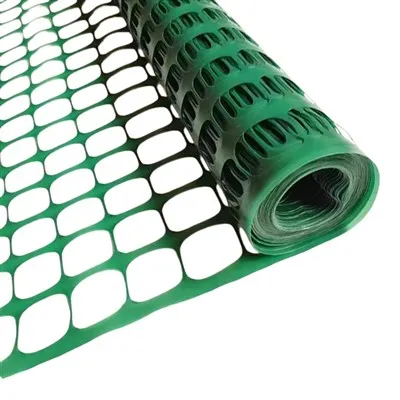
If you need help figuring out the right net for your land, or want to talk through your specific installation challenges, feel free to reach out to our team to discuss your poultry net needs. We’re here to help you get the job done right, no matter how uneven your ground is.
Plastic Black Garden Fence References:
- Poultry Housing Guidelines, University of California Agriculture and Natural Resources
- Fencing for Backyard Poultry: Best Practices, USDA Animal and Plant Health Inspection Service
- Ground Contour Adaptation for Electric and Mesh Fences, American Poultry Association Journal
Shaoxing Yongte Plastics Co., Ltd.
We are one of the most reliable poultry net manufacturers and suppliers in China, specialized in providing high quality customized products. We warmly welcome you to wholesale discount poultry net for sale here from our factory. Contact us for pricelist and free sample.
Address: INDUSTRIAL PARK, LIZHU TOWN, KEQIAO DISTRICT, SHAOXING CITY, ZHEJIANG PROVINCE
E-mail: support@sxxyongte.com.cn
WebSite: https://www.fenceplastic.com/
