Hey everyone, it’s Jake here, and if you’ve ever dealt with water treatment for industrial processes, commercial kitchens, or even big hospitality setups, you know choosing the right membrane is half the battle. I’m from a company that’s been supplying hot water RO membranes for a few years now, and I get so many questions from folks asking how these stack up against ultrafiltration (UF) membranes. Most of the time, people are just used to standard cold-water membranes, so when I bring up hot water RO, they’re like, “Wait, that’s a thing?” Totally is, and it solves a ton of problems regular membranes can’t. Let’s break this down like I’m chatting over coffee, no super jargon overload—promise. Hot Water RO Membrane
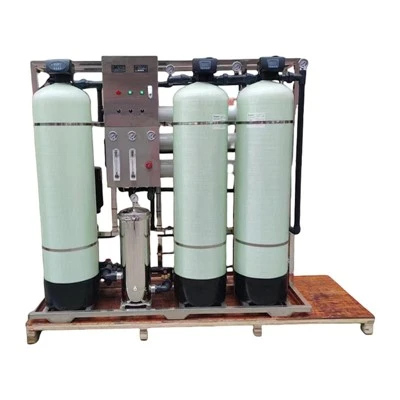
First, let’s get the basics straight, no fancy textbook stuff. Both RO and UF are filtration membranes, right? They act like super tiny sieves to pull junk out of water. But the hole size? That’s where everything starts. UF membranes have pores that are way bigger—like 0.01 microns, give or take. Hot water RO membranes? Their pores are like 0.0001 microns, so 100 times smaller. That might sound trivial, but it changes literally everything about what they can get rid of.
Let’s talk about what each actually does. If you’re thinking of UF, it’s good for removing big stuff—bacteria, viruses, suspended solids like dirt or silt, even larger proteins. You see UF used a lot in things like pre-treatment for drinking water, or in wastewater where you just need to clean up the goop. But it can’t touch dissolved stuff—you know, the salts, heavy metals, pharmaceuticals, tiny organic molecules that are literally dissolved so well they don’t act like solids anymore. That’s where hot water RO comes in. Those super tiny pores in RO can grab almost all dissolved salts (think sodium, calcium, magnesium—what makes water hard), heavy metals like lead or arsenic, even those micropollutants that are showing up in water supplies more and more these days. And the best part? They work at hot water temperatures, like up to 80°C (176°F), which is a game-changer for places that process hot water directly instead of cooling it down first.
Wait, let’s circle back to temperature because that’s the whole reason our membranes exist. A lot of industrial and commercial operations need to treat hot water. Like, if you’re in a food and beverage plant that uses hot water for cleaning or processing, or a hotel that recycles hot water from showers, or a pharmaceutical lab that needs consistent hot pure water. If you use a standard RO membrane, running hot water through it would destroy it in days, even hours. The polymer stuff standard RO is made of breaks down at high temps—swells up, the pores get messed up, it stops working. UF? Most standard UF can’t handle hot water either, some max out at like 40°C, so if you need higher than that, you’re stuck. Our hot water RO membranes are built with special, heat-stable polymers—think modified polyamide or even some ceramic blends, but we use a polyamide-based formula that’s tested to hold up at 80°C without breaking down. We’ve had customers run our membranes for 3 years straight on 75°C water, and they still perform almost like new. That’s a huge difference from both standard RO and UF.
Now let’s talk about performance. Let’s take a real example—say a commercial bakery that needs hot water for mixing dough, cleaning equipment, and making sure their process water is free of hard salts (hard water makes dough tough, right?). If they use UF, they can get rid of yeast that would mess with fermentation, and silt from their water source, but they’ll still have calcium and magnesium. That means they need to add water softeners, which cost money, use salt, and create extra waste. If they use hot water RO, they remove 99% of those salts directly, right in the hot water stream—no softener needed, saves them cash on chemicals and maintenance. Another example: a brewery that’s recycling hot waste water from brewing and cleaning. They need to get rid of not just bacteria and solids, but also residual hops, yeast, and even small flavor compounds that would ruin the next batch. UF would leave those small organic molecules, but hot water RO grabs them, so the recycled water is pure enough to reuse. UF can’t do that—its pores are too big.
But wait, I’m not here to bash UF, because it has its place. If someone just needs to remove big particles and bacteria, and their water is already at a temp UF can handle, UF is cheaper upfront. It has a higher flow rate too, right? Because bigger pores mean water moves through faster. Our hot water RO, since it has tiny pores, does have a slightly lower flow rate per square meter—like, you can’t push as much water through as fast as UF. But here’s the tradeoff: the water you get from RO is way purer. If purity is non-negotiable, that lower flow is worth it. For example, a hospital that needs sterile hot water for medical equipment can’t use UF—they need to remove even viruses and dissolved contaminants, so RO is non-negotiable. UF won’t get those small stuff, even if it’s hot.
Maintenance is another big topic, and this is where a lot of people get tripped up. Standard RO and UF both need cleaning, but the hot water RO has a few extra perks. Because it works at high temps, you can actually do hot water cleaning on the membrane itself—like, run 60°C water through it with a mild cleaner, and that kills more bacteria and gets rid of scale way better than cold water cleaning. We tell our customers that hot water RO membranes are easier to sanitize, which is huge for food and pharma applications where sanitation is mandatory. UF membranes, even if they can handle some heat, don’t do well with hot cleaning—too much heat can damage their polymer, so you’re stuck using harsh chemicals that can damage the membrane over time. Also, our membranes resist scaling better because they can run at higher temps—scale forms faster in hot water, but our membrane’s surface is modified to prevent mineral buildup, so you don’t have to clean them as often. We’ve had customers go 6 months between cleanings with our hot water RO, whereas their old standard RO membranes needed cleaning every 2-3 months.
Cost is always the big question, so let’s be real. Upfront, hot water RO membranes are more expensive than both standard RO and UF. Like, a 4-inch hot water RO element might cost twice as much as a standard RO, and a bit more than a good UF. But when you look at the total cost of ownership, it adds up. No need for water softeners if you’re using RO—saves on salt and resin replacements. Less cleaning means less downtime, which is a huge deal for factories that can’t afford to shut down a line for cleaning. Longer membrane life too—our hot water RO membranes last 3-5 years, whereas a standard RO in hot water might last 1 year, and UF membranes usually last 2-3 years. So over 5 years, the total cost is pretty comparable, and you get way better water quality.
Wait, let’s address a common myth: people think hot water RO is just for industrial stuff, but no—we supply to some small cafes and boutique hotels too. For example, a coffee roaster that uses hot water (up to 90°C) for espresso needs water free of chlorine, salts, and any dissolved gunk that would mess with the coffee flavor. UF would leave small organic compounds that make the coffee taste off, but our hot water RO removes them, so their espresso is consistent, no matter what’s in their tap water. They don’t have to cool the water down to use RO, which saves energy—wait, that’s another point! If you don’t have to chill hot water to run it through a standard membrane, you’re not using energy for cooling. That’s a big energy saver, especially for places that use a lot of hot water.
Let’s also talk about what each can’t do, to be fair. UF can’t remove dissolved salts, heavy metals, micropollutants. RO (hot water or standard) can, but standard RO can’t handle high temps. So if you have a hot water stream that needs full purification, hot water RO is the only option. If your water is cold and you just need basic filtration, UF is fine. There’s no one-size-fits-all here, and that’s why we spend so much time walking customers through their specific needs—we don’t want to sell someone a hot water RO if a UF would work, because that would be wasting their money.
I’ve had a customer who made the switch last year—they run a commercial laundry that uses 60°C water for washing. Before, they were using UF, but their water was hard, so they had to add salt-based softeners, which cost them about $1,200 a month. They switched to our hot water RO, and now they don’t need the softeners at all. Their detergent usage went down too, because the pure water lathers better. The membrane cost them $15,000 upfront, but they already saved $8,000 in the first 6 months, and their downtime for cleaning went from 8 hours a month to 2 hours. That’s the kind of result that makes me love what I do—solving real problems for real people.
Another thing to mention: fouling resistance. Both membranes can get fouled by stuff like biofilm, but hot water RO’s smooth, heat-stable surface is less likely to let biofilm stick. We have a special anti-fouling coating on our elements that’s tested to reduce biofilm buildup by 70% compared to standard RO and even many UF membranes. For places that process wastewater, which has a lot of organic junk, that’s a huge win—less downtime for flushing and cleaning.
Wait, let’s make sure I’m not overselling. If you’re just looking to filter home water, or small-scale stuff where you don’t need super pure water, both UF and standard RO are fine. But if you’re dealing with hot water, needing dissolved contaminant removal, or high-volume commercial/industrial use, hot water RO is the way to go. I’ve seen too many people waste money on UF because they thought it would work, only to have to upgrade later. That’s why I always encourage folks to lay out their needs first: what’s the temperature of your water? What do you need to remove? How much water do you process? Then we can figure out if hot water RO is the right fit.
At the end of the day, it all comes down to your specific use case. UF is great for basic, cold-water filtration where speed is key. Hot water RO is for when you need a higher level of purity, you’re working with hot water, and you want to save money long-term on chemicals, energy, and downtime. We’ve been supplying these membranes for years, and we’ve worked with all kinds of industries—food and beverage, hospitality, pharmaceuticals, wastewater treatment, even petrochemical plants that need to treat hot process water.

If you’re in the market for a new membrane, or you’re tired of dealing with the headaches of standard membranes for your hot water needs, reach out—we can walk you through your options, no pressure. We’ll even do a free sample test for your water, so you can see exactly how our hot water RO performs for your specific situation. No salesy nonsense, just straight talk, since that’s how we do business here.
Commercial RO Membrane References:
- Water Quality & Treatment: A Handbook on Drinking Water, 6th Edition, American Water Works Association
- Membrane Technology and Applications, 3rd Edition, Richard W. Baker
- Industrial Water Treatment: Principles and Applications, 2nd Edition, Jeff Hines
- "Performance of Heat-Stable Reverse Osmosis Membranes for High-Temperature Water Treatment", Journal of Membrane Science, Vol. 562, 2018, pp. 112-120
- Ultrafiltration Membranes: Properties and Applications, Elsevier, 2020
- Food and Beverage Water Treatment Manual, International Water Association
Fujian Huamo Technology Co., Ltd.
Fujian Huamo Technology Co., Ltd. is one of the most professional hot water ro membrane manufacturers and suppliers in China, featured by quality products and good service. Please rest assured to wholesale the best hot water ro membrane made in China here and get price list from our factory. Contact us for custom service and OEM service.
Address: No.6 Hengtong Rd, Shanmei Village, Xiamei Town, Nanan City, Fujian Province, China
E-mail: info@huaromembrane.com
WebSite: https://www.hmromembrane.com/
