If you’ve ever wandered around a warehouse at 2 a.m., watching a new hire fumble with a hand pallet truck, knocking over half a stack of cardboard boxes in the process, you’ve probably wondered—could an electric pallet truck fix this chaos? As someone who’s spent the last eight years selling and servicing electric pallet trucks, I get this question all the time. Prospective buyers lean in, half-expecting a sales pitch that glosses over the real work of running a warehouse: long shifts, tight deadlines, and employees who need equipment that doesn’t require a mechanical engineering degree to operate. Let’s cut through the hype and answer this question honestly: Is it easy to operate an electric pallet truck? Electric Pallet Truck
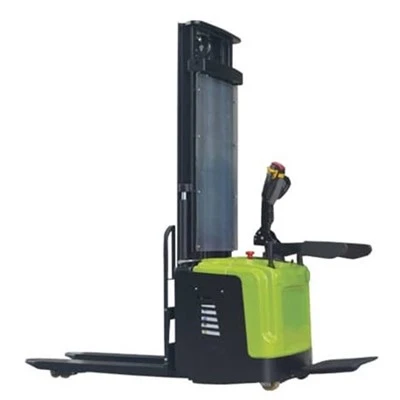
First, let’s start with the basics. When I say “operate,” I’m not talking about pressing a few buttons and driving off— I’m talking about a worker with two weeks of training, standing for 10 hours a day, being able to move 5,000-pound pallets across uneven warehouse floors, through narrow aisles, and up gentle ramps without accidentally dropping a load or crashing into a forklift. For most modern electric pallet trucks, that’s not just possible—it’s simpler than using a heavy-duty hand pallet truck, which is the alternative many teams rely on.
Let’s break down the core controls, because that’s what makes or breaks ease of use. I’ve seen old electric pallet trucks from the early 2000s that had a jumble of levers, dials, and switches—you’d have to check a manual just to figure out how to switch between forward and reverse. But the models we sell as a supplier? They use what’s called a “finger-operated controller.” It’s a small, curved handle that fits right in the palm of your hand. To go forward, you push the controller forward a little; reverse is a gentle pull back. Speed is gradual—push a little more, and you go faster; ease off, and you slow down automatically. There’s no clutch, no gear shift, no complicated foot pedals to manage. Even a worker who’s never used a powered material handling vehicle before can master this in 15 minutes. I remember a new hire at a small grocery distribution center I work with—she’d never touched an electric truck before, and by the end of her first day, she was moving pallets of produce without bumping a single shelf.
Next, consider load handling, which is where a lot of workers get nervous. With hand pallet trucks, you have to pump a hydraulic lever to lift the forks, which is hard on your arms and wrists, especially when you’re doing it 50 times a day. Electric pallet trucks eliminate that physical strain entirely. The lift function is electric—one small button on the controller, and the forks rise smoothly to the right height. No pumping, no straining. The lowering is just as controlled; you don’t have to worry about the forks dropping suddenly and damaging the pallet or the floor. That’s a big win for worker comfort, but it also makes the operation easier. I’ve seen many warehouse managers tell me that turnover dropped by 20% after switching from hand trucks to electric models, and one of the top reasons was the reduction in physical strain from lifting loads manually.
But wait, what about tricky environments? A lot of customers ask, “Will this work in our narrow aisles?” or “Is it easy to use on uneven concrete?” The short answer is yes, but that depends on the model. Modern electric pallet trucks are designed with a tight turning radius—most can pivot almost in place, which is a huge difference from forklifts that need 10 feet of space to turn. For warehouses with aisles that are only 8 feet wide, electric pallet trucks fit like a glove. The wheels are also built for durability; some have solid rubber tires that handle small bumps and uneven warehouse floors without jostling the load. I recently had a customer in a metal stamping plant who was worried about moving heavy steel pallets across a floor with minor cracks and dips. We recommended a model with reinforced wheels and a stable base, and they told me after a month that their workers found it way easier to maneuver than their old hand trucks, which would get stuck in the floor cracks all the time.
Now, let’s talk about what makes electric pallet trucks easier to operate than their hand-operated cousins. With a hand pallet truck, every movement is powered by the user—if you hit a small bump, you have to pull harder to keep moving. If you’re lifting a heavy load, your arms get tired, so you go slower, which can lead to bottlenecks during busy periods. Electric models take that physical work off the table. The motor does the heavy lifting, so even a 120-pound worker can move a 5,000-pound pallet without breaking a sweat. That consistency is key; workers don’t have to adjust their effort for different loads, so their focus stays on the path ahead, not on pushing or pumping.
But here’s the thing—ease of operation isn’t just about controls and motors. It’s also about maintenance, because a broken truck is never easy to operate. A lot of people assume electric vehicles require complex, expensive maintenance, but that’s not true for electric pallet trucks. Most models use lead-acid or lithium-ion batteries that are easy to swap out. Lithium-ion batteries, which we recommend to most customers, can be charged in 2 hours, and you can top them up whenever you take a break—no need to wait for them to fully discharge. There’s no engine to tune, no oil to change, no filters to replace. The only regular maintenance is checking the tires and the forks, which takes 10 minutes a week. That means less downtime for your team, so the truck is always ready to go, which makes operating it that much easier. I’ve had customers who thought electric trucks would be high-maintenance, but after a year, they told me they spend a fraction of what they used to spend fixing hand trucks that break from overuse.
Now, let’s address the potential downsides, because no piece of equipment is perfect. Some people worry that electric pallet trucks are harder to learn than hand trucks, but that’s only if you’re comparing a brand-new, untested model to a hand truck that’s been around for decades. The reality is that the learning curve for a basic electric pallet truck is almost identical to a hand truck, once you account for the lift function. Where people do struggle is if they get a model with too many extra features they don’t need. For example, some high-end electric pallet trucks have Bluetooth connectivity, digital displays, and speed limit settings that can be adjusted remotely. If you’re a small warehouse with 5 workers, you don’t need those features. A basic model with the core controls and a reliable battery is all you need, and that’s so easy to operate that even part-time seasonal workers can use it during peak season.
Another common concern is weight capacity. It’s true that some cheap electric pallet trucks can’t handle loads over 3,000 pounds, but if you buy a reputable model from a supplier like us, you can get ones that handle up to 6,000 or even 8,000 pounds. That’s more than enough for most warehouses, and operating a heavy-load electric pallet truck is just as easy as a lighter one—because the motor does all the work. You don’t have to worry about straining to push a heavy load, which is the hardest part of operating a hand pallet truck with a full load.
Let me share a real example to put this all in perspective. Last year, I worked with a 3PL company that handled e-commerce orders for three major retailers. They had a fleet of 20 hand pallet trucks, and their workers were complaining about back pain, wrist injuries, and slow order picking during Black Friday. They decided to switch to 15 electric pallet trucks. The first week, their training team spent 2 hours going over the controls, and by the end of the week, every single worker was operating the trucks without supervision. A month later, their order picking speed was up by 35%, and their workers’ compensation claims for material handling injuries dropped to zero in six months. The operations manager told me, “I thought electric trucks would be complicated, but they’re actually easier to use than hand trucks. No more pumping heavy loads, no more struggling through narrow aisles—my team loves them.”
So, is it easy to operate an electric pallet truck? For most teams, yes—especially when you choose the right model for your needs. The key is to avoid overcomplicating things. You don’t need a fancy model with extra features if you just need to move pallets around a warehouse or loading dock. Stick to a basic, reliable model with intuitive controls, a long-lasting battery, and a turning radius that fits your space. Train your workers for a short period, and they’ll be comfortable using it in no time.
If you’re still on the fence, or if you want to talk about which electric pallet truck is right for your operation, reach out to our team to discuss your needs. We can walk you through different models, share customer testimonials from similar businesses, and help you find a solution that’s easy to operate, reliable, and fits your budget.
Narrow Reach Trucks References:
- Material Handling Industry of America. (2022). Electric Pallet Truck Operational Efficiency and Worker Ergonomics Report.
- Occupational Safety and Health Administration (OSHA). (2021). Powered Industrial Truck Operator Training and Evaluation Guidelines.
- Global Market Insights. (2023). Electric Pallet Trucks Market Size, Share & Trends Analysis Report by Type, by Application, by Region, and Segment Forecasts, 2023-2030.
- Ergonomics Society. (2022). The Impact of Powered Material Handling Equipment on Warehouse Worker Musculoskeletal Health.
Hangzhou Carry Equipment Co., Ltd.
Hangzhou Carry Equipment Co., Ltd. is one of the most professional electric pallet truck manufacturers and suppliers in China, also supports customized service. Please feel free to buy advanced electric pallet truck for sale here and get quotation from our factory. For price consultation, contact us.
Address: No.360 Tongxiang Rd., Yinzhou Economic Development Zone, Yinzhou Dist., Ningbo, China
E-mail: Sales@carryupmhe.com
WebSite: https://www.carrymhe.com/
